
Key Takeaways
- "Warped rotor" is a misnomer — the disc rarely bends. The real problem is disc thickness variation: microscopic high and low spots on the rotor face that the pad bounces across during braking
- The signature feeling: a rhythmic pulsing in the brake pedal — like it's pushing back at you — that speeds up and slows down with wheel rotation
- Pedal pulses = front or rear rotors. Steering wheel shakes = specifically front rotors. Seat vibration = specifically rear rotors
- Uneven rotors extend stopping distance. They do not smooth out on their own — the surface variation gets worse with every brake application
- Replacement beats resurfacing on most modern vehicles — rotors are designed thin and have little margin to machine safely
Can you drive on warped rotors? — The direct answer
"Warped Rotor" — What's Actually Happening
A true physically bent rotor — like a warped vinyl record — is extremely rare and usually only happens from a major impact or severe installation error. What everyone calls a warped rotor is almost always disc thickness variation: the rotor face is no longer perfectly uniform. There are microscopic high spots and low spots across the surface. When the brake pad contacts a high spot, it gets pushed back against the caliper piston. That push sends a pulse up through the brake fluid and caliper, creating the rhythmic pulsing you feel in the pedal and steering wheel.
The rhythm is the diagnostic clue. Brake pedal pulsation from thickness variation pulses in sync with wheel rotation — it speeds up as you start braking from highway speed, then slows down as the car decelerates. A consistent vibration that doesn't change rhythm is more likely a tire or suspension issue. See our car shaking when braking guide if you're unsure which one you have.
Symptoms — How to Confirm It's the Rotors
The clearest symptom is a pulsing brake pedal — the pedal vibrates or pushes back against your foot in a rhythmic beat as you apply pressure. You may also notice the steering wheel shaking side to side if the front rotors are the source, or a vibration through the seat if it's the rear. The shake or pulse typically worsens when braking from higher speeds and can be subtle or pronounced depending on how much variation has developed.
Secondary symptoms: longer stopping distance than usual, a groaning or light grinding sound during braking (from the pad rocking across the uneven surface), and uneven brake pad wear if a seized caliper has been contributing to the heat buildup. Visual inspection through the wheel spokes can sometimes reveal a shiny band or scored ring on the rotor face — evidence of where the pad has been making inconsistent contact.
Pulsing pedal that speeds up and slows with wheel speed = thickness variation. Steering wheel shake = front rotors specifically. Seat vibration = rear.What Causes Rotors to Develop Thickness Variation
Heat is the root cause in almost every case. Each brake application generates friction heat. Rotors are designed to absorb and dissipate that heat quickly. When heat builds faster than it dissipates — or concentrates unevenly on the rotor face — the metal softens slightly and deforms under the clamping force of the pads. The most common triggers: repeated hard braking from high speed (track driving, mountain descents, aggressive city driving), a dragging caliper that keeps the pad in partial contact between stops and generates constant heat on one spot, and driving through standing water immediately after heavy braking (thermal shock — cold water on a hot rotor).
Two installation errors also cause early rotor variation: uneven or overtightened lug nuts, which distort the rotor hat and transfer to the friction face over 5,000–10,000 miles, and new rotors installed without properly cleaning rust or debris from the hub mounting surface, causing the rotor to sit slightly cocked. Neither of these is rare — both are worth flagging if the vibration developed shortly after a brake job.
Vibration that started within a few thousand miles of a brake job = installation error or missed caliper service. Go back to the shop.Resurface or Replace? — The Honest Answer
Resurfacing (machining the rotor face flat on a lathe) works — but only if the rotor is above minimum thickness after the material is removed. Modern rotors are cast progressively thinner than older vehicles to save weight, leaving less margin. Many rotors that develop thickness variation are already close to or at minimum spec, meaning resurfacing isn't safe. A freshly resurfaced rotor is also thinner than new, dissipates heat less efficiently, and is more susceptible to developing variation again faster.
The cost difference is smaller than most people expect. Resurfacing runs $80–$120 per axle in parts but requires the same labor as replacement. A new rotor pair often adds only $60–$100 to the parts cost. For most vehicles, the math favors replacement — especially if the pads are also being replaced. Always replace both rotors on the same axle; mismatched rotors create unequal braking force. Total cost: $280–$450 per axle for rotors + pads.
How to Make Rotors Last Longer
The two most impactful habits: avoid repeated hard braking from high speed (let the car coast before applying the brake when possible), and don't ride the brakes on long descents — use engine braking to maintain speed and apply firm, brief stops rather than constant light pressure. Light pressure keeps the pad in contact with the rotor continuously, creating a hot spot exactly where variation starts.
Maintenance that directly affects rotor life: brake fluid replacement every 2–3 years (moisture-contaminated fluid lowers boiling point, increasing the chance of heat damage to pads and rotors), caliper slide pin service at every brake job (a dragging caliper is the single fastest way to develop rotor variation), and bed-in new pads properly — 8–10 moderate stops from 30 mph before any hard braking, to create an even transfer layer on the rotor face.
Frequently Asked Questions
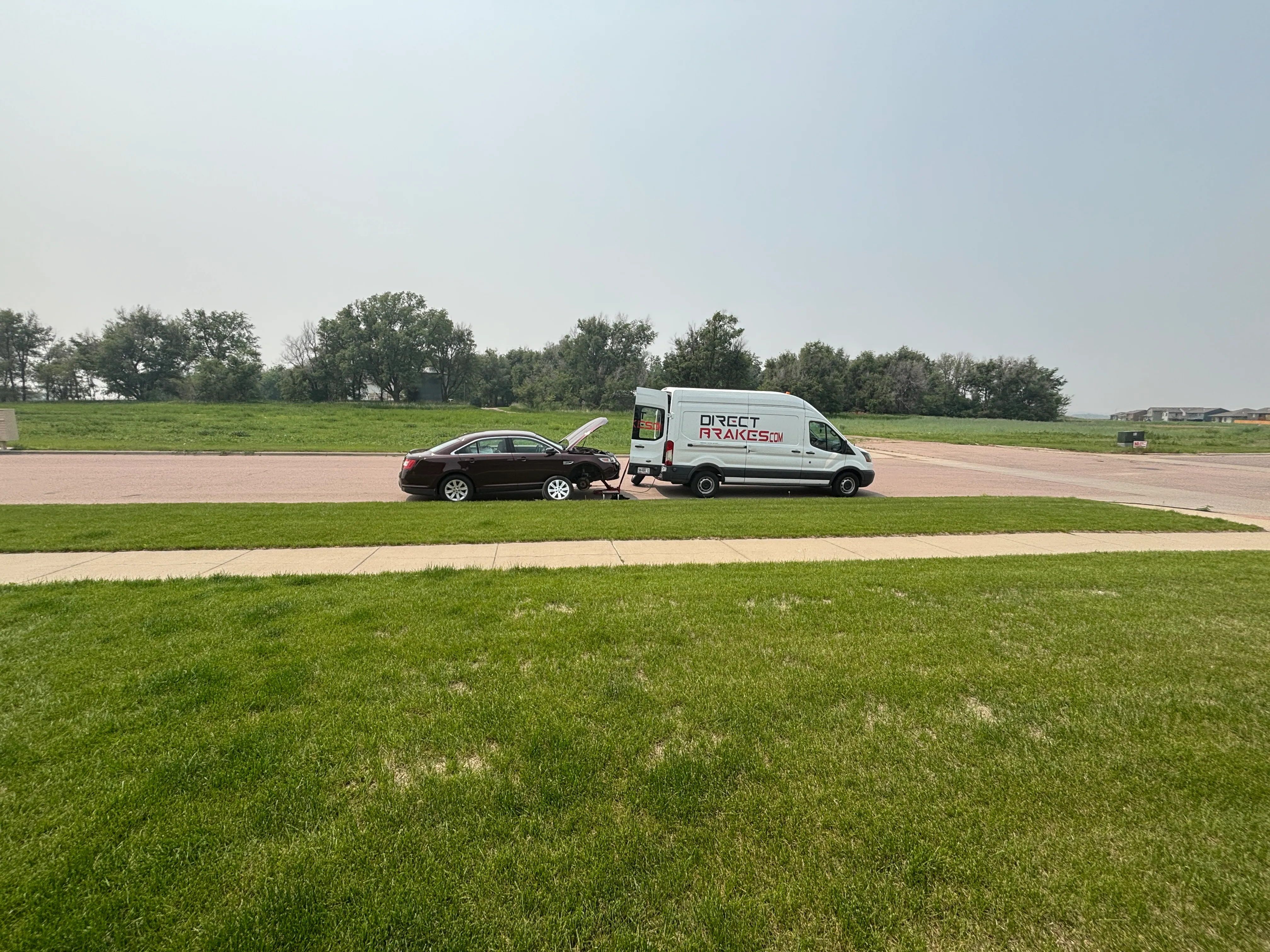
Car pulling when you brake? Call (605) 376-2130 — we'll diagnose it and fix it at your door, same day.
Pulsing pedal or shaking wheel?
We diagnose and replace rotors at your door. Same-day in Sioux Falls and Omaha.
Get Free Quote (605) 376-2130