Key Takeaways
- A soft or sinking pedal means your hydraulic system has lost pressure — stop driving
- Brake fluid is clear to light yellow when new, darker brown as it ages — thinner than oil
- Low fluid with no visible leak usually means internal master cylinder failure or worn pads
- Topping off fluid is not a fix — the leak continues and gets worse
- The five most common leak locations: master cylinder, brake lines, rubber hoses, caliper seals, bleeder screws
What Brake Fluid Looks Like
Before you can spot a leak, you need to know what you're looking at. Brake fluid is clear to pale yellow when new and turns darker brown as it absorbs moisture and ages. It's thinner than engine oil — closer to water in consistency — and has a slightly oily feel with a faint chemical smell.
Unlike oil, brake fluid doesn't leave a thick puddle. It tends to leave a small, slightly wet or greasy spot. It doesn't smell like exhaust and it won't look black like motor oil. If you find a light-colored slick spot under a wheel or along the underside of the car, that's worth paying attention to.
Brake fluid damages paint
If you find brake fluid on your vehicle's painted surface, wipe it off immediately with water. It strips paint fast and causes permanent damage if left to sit.
Soft, Spongy, or Sinking Brake Pedal
This is the most serious sign. Your braking system is hydraulic — it works by fluid transmitting pressure from the pedal to the calipers. When fluid leaks out, pressure drops. The result is a pedal that feels soft or spongy instead of firm, or one that sinks toward the floor when you hold steady pressure.
If your pedal sinks to the floor or you need to pump it to get braking response, your brake system has lost significant hydraulic pressure. Do not drive this vehicle. Get it towed or call a mobile mechanic to come to you.
What you'll feel
- Pedal feels soft or spongy instead of firm
- Pedal slowly sinks when you hold it down
- You need more pedal travel than usual to stop
- Pumping the pedal restores some firmness (sign of air in the lines)
Wet Spot Near a Wheel or Under the Car
A small wet spot under a wheel — especially after the car has been parked — is a common early sign. It could be near a rear wheel (wheel cylinder on drum brakes), near a front wheel (caliper seal or rubber hose), or along the frame under the car (steel brake line).
The spot will often be on the ground directly below or slightly inward from the wheel. If it's near the driver's side firewall, that points to the master cylinder. If it's along the frame rail, that's usually a corroded steel brake line.
What to look for
- Small clear to light yellow wet spot on the ground near a wheel
- Wet or greasy area on the inside of a wheel or tire
- Fluid seeping from the rubber hose or steel line connection
- Wet residue around the bleeder screw on the caliper
Brake Fluid Low in the Reservoir
The brake fluid reservoir is a small translucent plastic container on top of the master cylinder under the hood. It has MIN and MAX lines. If the fluid level is below the MIN line, you have either a leak or significantly worn brake pads — or both.
Here's the thing most people don't know: as brake pads wear down, the caliper pistons extend further out to maintain contact with the rotor. Those extended pistons hold more fluid, which lowers the reservoir level. This is normal wear and not a leak. But if your pads aren't worn and the fluid is still low, that's a leak.
Low fluid without visible leak — two common causes
- Worn brake pads: Pistons extended further, holding more fluid — check pad thickness first
- Internal master cylinder failure: Leaking into the brake booster where it's hidden — shows as fluid buildup behind the booster or a wet booster diaphragm
Brake Warning Light
Most vehicles have a sensor in the brake fluid reservoir that triggers the dashboard warning light when fluid drops below a minimum level. If your brake warning light comes on and stays on — not just during startup — low fluid is one of the most common causes.
The same light can also indicate engaged parking brake, a brake system fault, or ABS issues. But if it comes on while driving with the parking brake off, check your fluid reservoir immediately.
What the light looks like
- Red circle with an exclamation mark — usually the hydraulic brake system warning
- "BRAKE" text in red on the dashboard
- Yellow "ABS" light — separate system but can accompany fluid issues
Burning Smell After Hard Braking
If brake fluid leaks onto a hot rotor or caliper and burns off, it creates a sharp chemical smell — different from the burning rubber smell of overheated pads. You might notice it after hard stops, on long downhill drives, or after heavy traffic.
The smell is usually stronger near one wheel. If you can pinpoint which corner it's coming from, that's your suspected leak location. Combined with a soft pedal or wet spot, this is a clear sign of an active external leak.
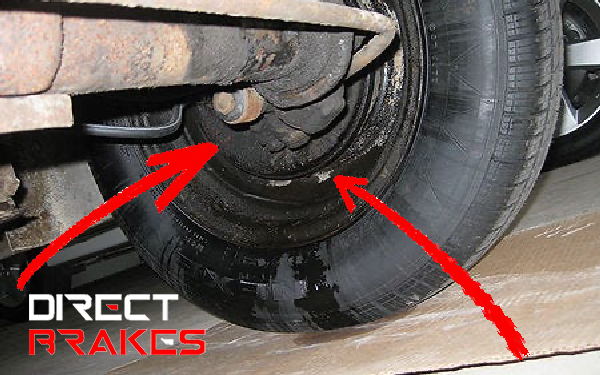
Inspect the wheel area where the smell is strongestWhere Brake Fluid Leaks Happen
Knowing the signs tells you something is leaking. Here's where to look for the source:
Master cylinder
Sits on the firewall near the driver's side. Leaks here are often internal (into the brake booster) or visible as fluid weeping from the reservoir seal or forward-facing fittings. An internal master cylinder leak shows no external puddle but causes a sinking pedal.
Steel brake lines
Run along the frame of the car to each wheel. They corrode from the outside in, especially in climates with road salt. A pinhole in a steel line can weep slowly for weeks before failing completely. Common on vehicles over 8–10 years old.
Rubber brake hoses
Connect the steel lines to the calipers at each wheel. They flex with suspension movement and eventually crack from the outside or collapse internally. External cracks allow fluid to seep; internal collapse causes a stuck caliper. See our guide on testing caliper vs. brake hose.
Caliper piston seals
The rubber dust boots and seals around the caliper pistons wear out over time, especially on high-mileage vehicles. A leaking caliper seal leaves fluid on the inside of the rotor and wheel. Usually accompanied by uneven pad wear and a soft pedal.
Bleeder screws
The small valves used to bleed air from the system. They corrode and can weep fluid over time, especially if they were last opened many years ago. Usually a minor seep rather than a significant leak, but still worth addressing.
Is It Safe to Drive With a Brake Fluid Leak?
The short answer is no — but the urgency depends on how much fluid you've lost and how the pedal feels.
If your pedal feels normal and you only discovered the leak visually, you have a small window to get to a mechanic safely — ideally the same day. Drive conservatively, leave extra stopping distance, and don't tow or haul weight. Check the fluid level before driving.
If your pedal is soft, spongy, or sinking, do not drive. Your braking system does not have the hydraulic pressure it needs to stop reliably. This is a tow-or-mobile-mechanic situation. There is no safe amount of driving with a compromised pedal.
Topping off is not a fix
Adding fluid to the reservoir gets you to your appointment — it doesn't stop the leak. The fluid that was there leaked out, and it will continue to leak. Brake fluid also absorbs moisture, which lowers its boiling point and corrodes the metal components it contacts. Fix the source, don't mask it.
Frequently Asked Questions
Noticed a soft pedal or wet spot? Call (605) 376-2130 — we'll diagnose it and come to you same day.
Suspect a brake fluid leak?
We come to your home or office. Same-day appointments available.
Get Free Quote (605) 376-2130