
Key Takeaways
- Rapid clicking when you turn the key is the most reliable indicator of a dead or weak battery
- Cable order matters: red to dead positive, red to good positive, black to good negative, black to unpainted metal on the dead car - never to the dead battery's negative post
- Drive at highway speed for at least 30 minutes after a jump - idling barely recharges the battery
- If the car dies again after a full drive, the alternator is not charging - the problem is not just the battery
- A battery that has needed one jump should be tested - most will not return to full capacity and will fail again
Confirm It Is the Battery
Before reaching for jumper cables, take 60 seconds to identify the symptom. Rapid clicking when you turn the key - five or more clicks - almost always means the battery has enough voltage to trigger the solenoid but not enough to spin the starter motor. This is the most common dead-battery symptom and the easiest to confirm. Slow, labored cranking that eventually fails means the battery has some charge remaining but not enough to complete the start. Both of these point clearly to the battery.
Complete silence with no dash lights is a different situation. It could be a fully dead battery, but it could also be a loose or corroded terminal, a blown main fuse, or a disconnected cable. Before assuming the battery is dead, pop the hood and look at both terminals. White or blue powder on the posts is corrosion - this alone can prevent a start even with a fully charged battery. Clean the terminals with a wire brush and try again before jumping anything. If the car starts after cleaning the terminals, the battery may be fine and corrosion was the only problem.
Check terminals for corrosion before jumping - a corroded post mimics a dead battery exactly.Jump Starting with Jumper Cables
Cable order is not arbitrary. It controls where a spark occurs if one happens, keeping it away from the battery where hydrogen gas can accumulate. Get a second vehicle close enough that the cables reach both batteries with slack - engines off, vehicles not touching each other.
- 1
Red clamp to the dead battery positive (+) terminal. The positive terminal usually has a red cap or a plus symbol. Clamp firmly onto the post itself, not the cable or collar around it.
- 2
Red clamp to the good battery positive (+) terminal. The red cable now bridges both positive terminals. The clamps should not be touching any metal other than the terminal posts.
- 3
Black clamp to the good battery negative (-) terminal. Connect one black clamp to the negative terminal on the working vehicle. This is usually black or marked with a minus symbol.
- 4
Black clamp to unpainted metal on the dead car - not the battery terminal. Attach the final clamp to a solid unpainted metal surface on the engine block or chassis of the dead vehicle - a bolt, bracket, or strut mount. This grounds the circuit away from the battery and eliminates the risk of a spark near battery gases. This step is the one most people skip, and the reason it exists is real.
- 5
Start the working car and let it run 2 to 3 minutes. Allow the donor vehicle to push current into the dead battery before attempting to start. In cold weather, give it an extra minute.
- 6
Attempt to start the dead car. If it cranks slowly but does not start, wait two more minutes and try again. If three attempts fail, the battery may be too discharged to jump from a running car and may need a direct charger or replacement.
- 7
Disconnect in reverse order. Black from the dead car first, black from the good car, red from the good car, red from the dead car. Never let clamps touch each other while any end is still connected.
Jump Starting with a Portable Pack
A portable jump starter - also called a jump pack or battery booster - is simpler than cables because you only connect to one vehicle. Modern lithium packs are small enough to fit in a glove box and can start full-size trucks. Most do require some residual voltage in the battery to operate, though newer models work even on batteries near zero. Clamp the red lead to the dead battery positive terminal and the black lead to an unpainted metal ground on the engine block - the same final step as with cables, not to the battery negative post.
Turn on the pack if it has a power switch, then wait 30 to 60 seconds for it to sense the battery before turning the key. If the car starts, disconnect the pack immediately and drive for at least 30 minutes at highway speed. Avoid short errands after a jump pack start - the battery will not recharge from 10 minutes of city driving and you may not be able to restart at your next stop. Most packs also include a USB port and LED light, which makes them useful regardless of whether you have a battery problem.
Keep a jump pack in your vehicle. It eliminates the need for a second car and works in parking garages, driveways, and anywhere else you are stranded.What to Do After the Jump
A successful jump start means you have enough charge to run the engine - it does not mean the problem is solved. The alternator recharges the battery based on engine RPM. Idling in a driveway or parking lot barely pushes useful current into the battery. Drive at highway speed for at least 30 minutes immediately after the jump, not later in the day. If you turn the car off before the battery has recharged enough, it may not restart at your next stop even though the drive went fine.
After the drive, get the battery tested. Most auto parts stores will load-test it for free. The test checks voltage, cold cranking amps, and whether the battery can hold a charge under load - not just whether it has voltage at rest. A battery that rested at 12.4 volts but drops to 9 volts under load is not healthy and will fail again. Battery replacement cost: $150 to $250 depending on vehicle and battery type. A battery that needed one jump is almost always near end of life. Replacing it before it fails a second time is cheaper than a tow, cheaper than a service call, and avoids the situation repeating at a worse time.
Do not turn the engine off until you reach your destination after a jump. The battery may not have recovered enough to restart.Battery vs. Alternator - How to Tell the Difference
These two components are consistently confused because a failing alternator kills the battery and a dead battery can mask an alternator problem. The fastest diagnostic: jump the car and observe what happens over the next 24 hours. If the car runs normally after the jump, restarts fine after a 30-minute highway drive, and continues to start without issue, the battery was the problem. If the car dies again within hours or does not restart the next morning after a full drive, the alternator is not generating enough current to recharge the battery while the engine runs.
Additional alternator indicators include a battery warning light that stays on while driving, headlights that dim noticeably at idle when accessories are on, accessories that act erratically or cut out, and a whining or grinding sound from the engine bay near the alternator pulley. A multimeter gives a definitive reading: the battery should read 12.6 volts at rest and 13.7 to 14.7 volts with the engine running. A reading below 13.5 volts at idle means the alternator is not keeping up. Do not disconnect the battery cables while the engine is running on a modern vehicle to test the alternator - voltage spikes from doing this can damage the ECU and other electronics. Alternator replacement cost: $400 to $700 depending on vehicle.
Battery light on while driving after a jump = alternator problem, not just a dead battery. Get the charging system tested before replacing the battery alone.Warning Signs Before the Battery Fails
Most batteries give weeks of warnings before they fail completely. Cold weather is the critical variable in northern climates - a battery running at 70% capacity in October may not start the car on a January morning when temperatures drop to -10 degrees. Cold reduces a battery's cranking capacity by up to 60%, which means a marginal battery that starts reliably in fall will often fail on the first hard cold snap of winter. The time to test is before the first freeze, not after the first failure.
The signals to watch: slow cranking that takes noticeably longer than usual, especially on cold mornings. Headlights that are dimmer than normal at idle, particularly when the heater, rear defroster, and radio are running simultaneously. A battery that is over four years old with no recent test. Any battery that has needed a jump in the past 30 days. A bloated or swollen battery case - this is a sign of internal damage from heat and means immediate replacement, not a test. Electrical accessories acting erratically before the car fails to start - windows rolling slowly, heated seats cutting out, infotainment rebooting - are often the first signal that the battery cannot maintain voltage under combined load. Catching any of these before the car fails to start is a scheduled replacement at your convenience instead of an emergency call from a parking lot. Battery replacement cost: $150 to $250 installed.
Battery over 4 years old in a cold climate: test it before winter, not after it fails in the cold.Quick Reference by Symptom
Frequently Asked Questions
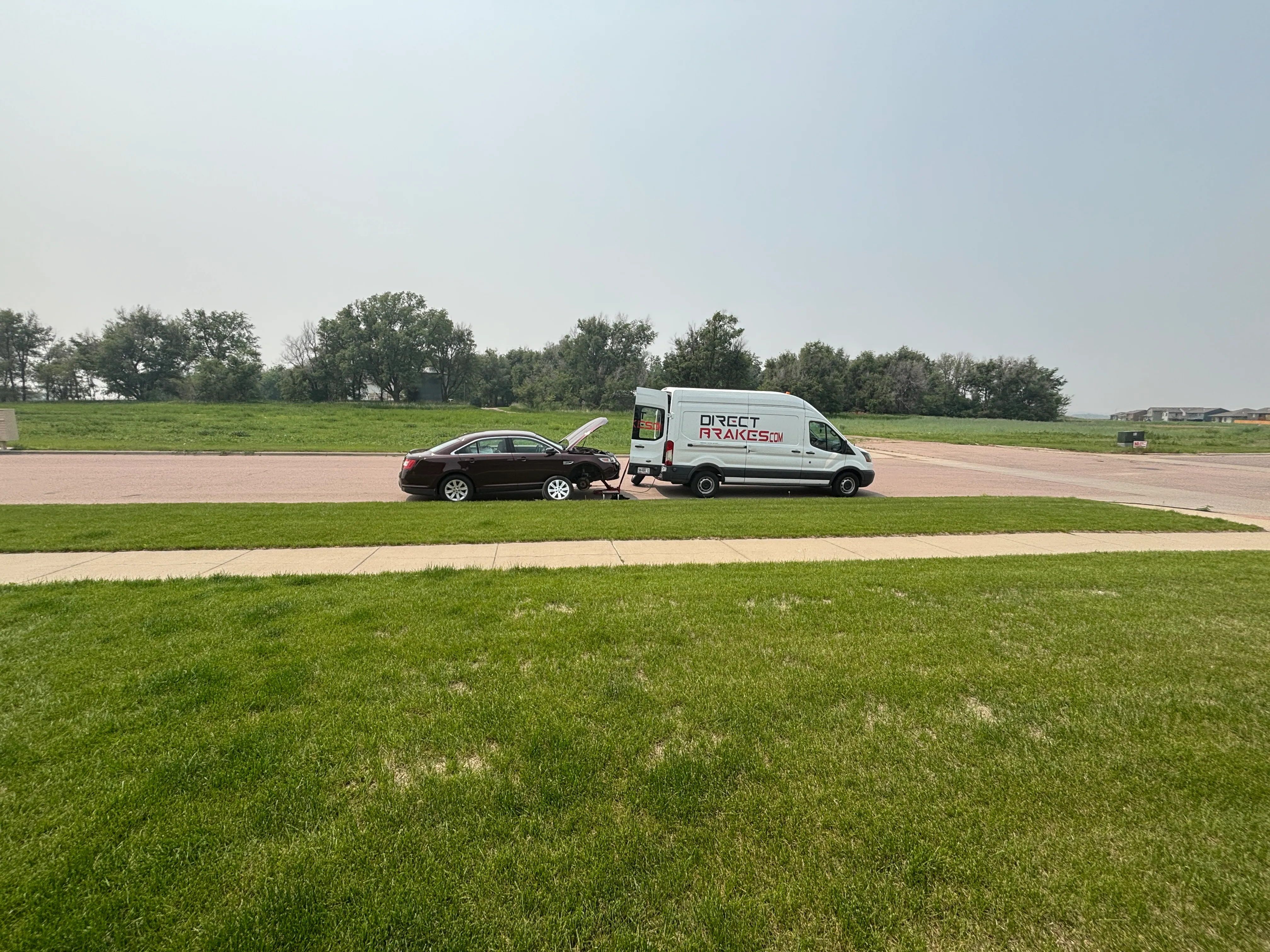
Battery dead or draining too fast? Call (605) 376-2130 -- we bring the replacement to you and test the charging system on the spot.
Dead battery? We come to you.
Same-day mobile battery replacement in Sioux Falls and surrounding areas. No tow truck needed.
Get Free Quote (605) 376-2130