Key Takeaways
- Mobile brake repair saves 3-5 hours per service compared to traditional shops
- Both options provide equal quality repairs with same parts and warranties
- Mobile service eliminates hidden costs like rental cars and towing
- Traditional shops may be better for complex diagnostics or specialty vehicles
- Consider your schedule, location, and specific repair needs when choosing
Table of Contents
- Introduction: The Rise of Mobile Brake Repair
- Factor 1: Convenience & Time Savings
- Factor 2: Cost Comparison
- Factor 3: Quality of Service
- Factor 4: Scheduling Flexibility
- Factor 5: Warranty & Guarantees
- Factor 6: Vehicle Compatibility
- Side-by-Side Comparison
- When to Choose Each Option
- Frequently Asked Questions
Introduction: The Rise of Mobile Brake Repair
The automotive service industry has undergone a significant transformation in recent years. Mobile brake repair services—where certified technicians come to your location to perform brake work—have emerged as a legitimate alternative to traditional auto shops. But is mobile service right for you?
According to industry research, mobile auto repair has grown by over 200% since 2020, driven by consumers seeking more convenient service options. Whether you're a busy professional who can't spare half a day at a shop, a parent juggling family responsibilities, or someone who simply values their time, understanding the differences between mobile brake service and traditional shops is essential for making an informed decision.
In this comprehensive guide, we'll examine six critical factors that differentiate mobile mechanic brake service from traditional auto shops. By the end, you'll have the information you need to choose the best option for your specific situation.
Convenience & Time Savings
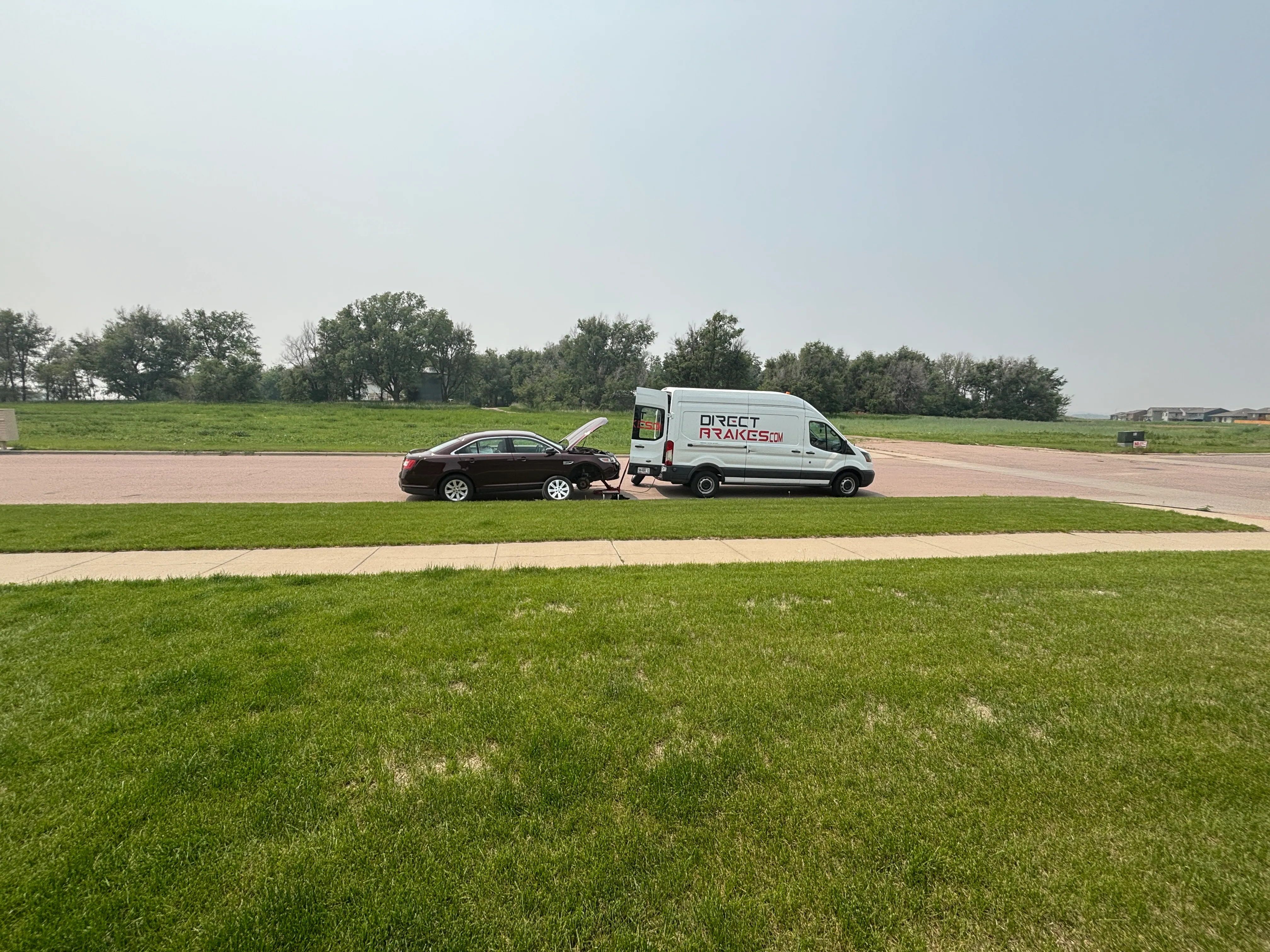
Mobile brake repair fundamentally changes the service experience by eliminating the need to visit a physical location. Instead of adjusting your schedule around shop hours, a certified technician comes to your home, workplace, or any safe location where you need service.
Traditional Auto Shop Experience:
- Drive to the shop (15-30 minutes each way)
- Wait for service or arrange alternative transportation
- Pick up your vehicle when repairs are complete
- Total time investment: 4-8 hours of your day
Mobile Brake Repair Experience:
- Book online or by phone at your convenience
- Technician arrives at your location with all necessary equipment
- Continue working, handling errands, or relaxing at home during service
- Total time investment: 0 hours of active involvement
For most drivers, the convenience of at-home brake repair represents 3-5 hours of time savings per service appointment. Over the lifetime of vehicle ownership, this adds up to significant time reclaimed.
Time Is Money
If you value your time at $30/hour, the 4 hours saved with mobile brake service represents $120 in value—often more than offsetting any price difference between options.
Cost Comparison: Mobile vs Shop
Many drivers assume mobile brake repair costs more than traditional shops because of the added convenience. In reality, pricing is often comparable—and sometimes mobile services are actually cheaper when you factor in all costs.
Direct Costs (What You Pay for Service):
Labor rates for mobile brake service are typically similar to traditional shops. Parts pricing is also comparable, as both use the same OEM and quality aftermarket components. Some mobile services have lower overhead costs (no building lease, fewer staff) which can translate to competitive pricing.
Hidden Costs of Traditional Shops:
- Towing fees if your vehicle isn't safe to drive ($75-150)
- Rental car costs if you need transportation ($40-80/day)
- Time off work for drop-off and pickup (2-4 hours)
- Uber/Lyft rides to and from the shop ($15-40)
- Shop fees and environmental charges ($15-50)
Total Cost of Ownership:
When comparing the true cost, mobile brake repair often comes out ahead. A brake pad replacement that quotes identically at $250 from both a shop and mobile service actually costs you $300-400+ at the shop once you factor in transportation, time off work, and convenience costs.
Quality of Service
A common concern about mobile mechanic brake service is whether the quality matches traditional shops. The short answer: yes, when you choose a reputable provider. Here's why:
Same Parts, Same Procedures:
Mobile brake repair technicians use identical brake pads, rotors, calipers, and hardware as traditional shops. Whether it's OEM parts or quality aftermarket brands like Wagner, Bosch, or ACDelco, the components are the same. Repair procedures follow manufacturer specifications regardless of where the work is performed.
Advantages of Mobile Service Quality:
- Direct technician communication — You work directly with the person doing your repairs, not a service writer
- Undivided attention — Your vehicle is the technician's only focus, not one of many in a busy shop
- Transparency — Watch the work being done if you choose, ask questions in real-time
- Accountability — The technician's reputation depends on your satisfaction
When Shops May Have an Edge:
- Complex diagnostics requiring specialized equipment
- ABS system programming that needs dealer-level tools
- Vehicles requiring lifts for certain repairs
- Weather-dependent situations (extreme cold, rain)
The best indicator of service quality isn't where the work is done—it's who does it. A certified, experienced technician will deliver excellent results whether in a shop bay or your driveway.
— ASE Certified Master TechnicianScheduling Flexibility
One of the biggest advantages of mobile brake service is scheduling flexibility. Traditional auto shops operate on fixed hours that may not align with your availability.
Traditional Shop Scheduling:
- Typical hours: Monday-Friday 8am-5pm, Saturday 8am-12pm
- Drop-off often required during business hours
- Pickup must occur before closing
- Weekend availability limited or unavailable
- Wait times can extend to days during busy periods
Mobile Brake Repair Scheduling:
- Extended hours including evenings and weekends
- Same-day appointments often available
- Schedule around your commitments, not theirs
- No need to take time off work
- Emergency and urgent service options
For working professionals, parents, or anyone with a demanding schedule, the flexibility of at-home brake repair service can be the deciding factor. Need your brakes done on a Saturday afternoon while you're home with the kids? No problem. Want to schedule service during your lunch break at work? Mobile services make it possible.
Warranty & Guarantees
Warranty coverage is a critical consideration when choosing brake service. The good news: reputable mobile brake repair services offer warranties comparable to traditional shops.
Standard Warranty Coverage:
Most professional brake services—whether mobile or shop-based—offer warranties covering:
- Parts: 12-24 months depending on manufacturer
- Labor: 12 months / 12,000 miles (typical)
- Lifetime warranties on premium brake pads (some providers)
What to Ask About Warranties:
- Is the warranty honored nationwide or location-specific?
- What's covered vs. what's excluded?
- How do you make a warranty claim?
- Is there a deductible for warranty work?
Reputable mobile mechanic services maintain proper business insurance and stand behind their work. Ask for documentation of warranty terms before service begins.
Vehicle Compatibility
Mobile brake repair works exceptionally well for most passenger vehicles, but certain situations may favor traditional shops.
Ideal for Mobile Brake Service:
- Standard passenger cars (sedans, coupes, hatchbacks)
- Crossovers and SUVs
- Light-duty trucks (F-150, Silverado 1500, Ram 1500)
- Minivans and family vehicles
- Most domestic, Asian, and European vehicles
May Require Shop Service:
- Heavy-duty trucks (2500/3500 series with dual rear wheels)
- Vehicles requiring lift-only access to brake components
- Complex European vehicles needing dealer-level programming
- Vehicles with air suspension requiring specialized tools
- Classic or specialty vehicles with rare components
When booking mobile brake service, provide your vehicle's year, make, model, and describe any known issues. A reputable provider will tell you upfront if your vehicle is suitable for mobile service or would be better served at a shop.
Side-by-Side Comparison: Mobile vs Auto Shop
| Factor | Mobile Brake Repair | Traditional Auto Shop | Winner |
|---|---|---|---|
| Convenience | Comes to your location | You travel to them | Mobile |
| Time Investment | 0 hours (work done while you continue your day) | 4-8 hours total | Mobile |
| Direct Cost | Comparable labor + parts | Comparable labor + parts | Tie |
| Hidden Costs | None | Towing, rental, time off work | Mobile |
| Part Quality | Same OEM/aftermarket options | Same OEM/aftermarket options | Tie |
| Warranty | 12-24 month coverage | 12-24 month coverage | Tie |
| Scheduling | Evenings, weekends, same-day | Business hours only | Mobile |
| Complex Diagnostics | Limited by portable equipment | Full diagnostic capability | Shop |
| Heavy-Duty Vehicles | Limited capacity | Full lift capability | Shop |
| Transparency | Watch work being done | Work done out of sight | Mobile |
When to Choose Each Option
Choose Mobile Brake Repair When:
- You have a busy schedule and can't spare half a day
- Your vehicle is safe to drive but needs routine brake maintenance
- You want to avoid towing costs for a non-drivable vehicle
- You prefer transparency and direct technician communication
- You need evening or weekend service
- You have a standard passenger vehicle, SUV, or light truck
- You want to continue working or relaxing during service
Choose a Traditional Shop When:
- Your vehicle needs complex diagnostics or ABS programming
- You have a heavy-duty truck requiring specialized lifts
- Weather conditions make outdoor service impractical
- You need additional services beyond brakes (alignment, suspension)
- Your vehicle is a specialty model needing dealer equipment
- You prefer the traditional shop environment
The Bottom Line
For the vast majority of drivers with standard vehicles needing routine brake service, mobile brake repair offers superior convenience, comparable quality, and often better overall value. Traditional shops remain the better choice for complex diagnostics, specialty vehicles, or when you need multiple services in one visit.