
Key Takeaways
- Warped or unevenly worn rotors are the most common cause — the pads clamp against an uneven surface and vibrate at the rotor's rotation speed
- Steering wheel shaking = front brake problem; pedal pulsation or seat vibration = rear brake problem
- Glazed pads produce a specific high-frequency vibration that gets worse as the brakes heat up, not better
- A seized caliper causes shaking plus a pull to one side and a hot wheel — it's doing double damage
- The longer warped rotors are left, the more likely they transfer their wear pattern into the pads — meaning both need replacement at that point
Where you feel it tells you where to look
Steering wheel shakes: front rotors. Brake pedal pulsates: any axle, often rear. Whole car shudders: rear brakes or a severe front issue. Shaking that gets worse as you slow below 20 mph: glazed pads. Shaking plus a pull to one side: seized caliper. Use this to narrow it down before getting under the car.
Warped or Unevenly Worn Rotors
This is the most common reason a car shakes when braking — and the most misunderstood. Rotors don't literally warp the way a metal plate warps under heat, but they develop lateral runout (the disc wobbles slightly side to side as it spins) and disc thickness variation (DTV — the rotor isn't uniformly thick around its circumference). Both produce the same symptom: as the pad clamps down, it hits high spots and low spots at the rotor's rotation speed, causing vibration.
The vibration frequency is tied to vehicle speed. At 60 mph you might feel a fast shimmy; as you slow to 20 mph it becomes slower and more pronounced. Front rotor problems send vibration directly into the steering wheel — the mechanical link from rotor to knuckle to tie rod to steering column is direct. Rear rotor problems register as pedal pulsation or whole-body shudder instead.
DTV develops faster than most people expect. Repeated aggressive braking without enough cool-down time creates hot spots in the rotor — areas that briefly expand and then contract unevenly as they cool. Over dozens of heat cycles those spots build into measurable thickness variations. Parking a hot rotor against a stationary pad (stopping, then leaving the car parked immediately after hard braking) accelerates this significantly.
How to confirm it
A dial indicator on the rotor hub can measure runout and thickness variation directly — anything over 0.001–0.002 inches of variation is enough to feel. Without a dial indicator: if the shaking is speed-proportional (faster at higher speeds, slower as you slow down) and worse after braking hard from highway speeds, it's almost certainly the rotors.
The fix
If the rotor is above minimum thickness (stamped on the hat or edge of the rotor), it can be resurfaced on a brake lathe — $25–$45 per rotor. If it's at or below minimum, it gets replaced. Always replace brake pads at the same time as rotor resurfacing or replacement: old pads have worn to match the old rotor surface and won't seat cleanly on a freshly machined one.
Service this week — warp transfers into pads if left too longGlazed Brake Pads
Brake pads are designed to work within a specific temperature range. When they're repeatedly overheated — from riding the brakes on a long downhill, aggressive stop-and-go driving, or leaving the parking brake slightly engaged — the resin binders in the friction compound harden and crystallize on the pad surface. The result is a slick, glassy surface that can't grip the rotor properly. That lack of grip, rather than clean friction, produces a rapid oscillating vibration as the pad skips across the rotor surface.
Glazed pads have a distinctive feel: the vibration gets worse as the brakes heat up during a stop, not better. You may also notice reduced stopping power — the car feels like it takes longer to stop than it should for how hard you're pressing. The pad surface will look shiny and smooth rather than the dull, slightly rough texture of a healthy pad. Sometimes only the inner or outer pad on a caliper is glazed if one piston is seizing and applying uneven pressure.
How to confirm it
Pull the wheel and inspect the pad surface. Healthy pads have a matte, slightly textured friction surface. Glazed pads look polished — shiny, sometimes with heat discoloration ranging from light tan to dark brown. The mating rotor surface may also show a corresponding glaze or mirror-like polish on its contact band.
The fix
Replacement — both pads and rotors on the affected axle. Glazed pads cannot be scuffed back to usable condition; the crystallized layer is throughout the surface layer of the friction material. Glazed rotors need resurfacing or replacement to remove the hardened transfer layer. Identify why they glazed in the first place (riding the brakes, stuck caliper, wrong pad compound for the application) or the new pads will follow the same path.
Service this week — also check why they glazedSeized Brake Caliper
A seized caliper produces shaking plus two additional symptoms that set it apart: a pull to one side and a wheel that runs noticeably hotter than the others. The caliper either won't fully release after you lift your foot (keeping the pad in constant drag contact with the rotor) or won't fully apply (providing asymmetric clamping force). Either way, that side of the axle is doing something different from the other side — and the car's response to that imbalance is vibration plus directional pull.
The vibration from a seized caliper has a different character than rotor warp. It's often accompanied by a burning smell from the affected corner, a wheel that's almost painful to hold your hand near after driving, and sometimes a pulsating pedal as the dragging pad intermittently grabs harder. It typically worsens progressively over weeks or months as the caliper seizes further.
How to confirm it
After a 10-minute drive, hold your hand near each wheel (don't touch — rotors can exceed 300°F). A seized caliper runs dramatically hotter on one corner. You can also try spinning each rear wheel by hand with the parking brake off and the car in neutral — excess resistance on one side confirms drag. A full caliper test procedure covers this in more detail.
The fix
Slide pin service (clean, lubricate, replace boots) if caught early: $80–$150. Caliper replacement if the piston is corroded internally: $150–$350 per corner. Pads and rotor on that corner almost always need to go with it — the constant drag wears the pad and scores the rotor surface. See our guide on brake pull diagnosis for the full caliper diagnostic process.
Diagnose this week — caliper drag damages pads and rotors every mileWorn Brake Pads at the End of Their Life
As brake pads wear down toward the end of their life, the friction material thins to the point where the metal backing plate begins to contact the rotor. That metal-on-metal contact produces a different kind of vibration than rotor warp — it's harsher, often accompanied by a grinding or scraping noise, and tends to come in at lower speeds or under lighter braking pressure where the remaining friction material can't fully buffer the contact.
At this stage the rotor is being actively scored with every stop. The shaking is a secondary symptom — the real damage is happening to the rotor surface, and the longer it continues the more likely the rotor needs to be replaced rather than resurfaced. Worn pads that have been making metal contact for more than a few hundred miles almost always need a rotor replacement alongside the pad replacement.
How to confirm it
Look through the wheel spokes at the pad. If you can see the metal backing plate with little to no friction material remaining, you're there. Most pads have a wear indicator — a small metal tab that contacts the rotor and squeals when pads are low. If you're hearing grinding rather than squealing, you've gone past the indicator and into metal-on-metal contact.
The fix
Pads plus rotors — at this stage the rotor surface has scoring that prevents a clean seating surface for new pads. See our brake pad and rotor replacement cost guide for pricing by vehicle. Replace both sides of the axle at the same time to maintain symmetrical braking.
Same-day service — rotors being scored every stopLoose or Corroded Brake Hardware
Brake pads sit in a bracket (the caliper carrier) and are held in place by clips, shims, and anti-rattle hardware. When those clips corrode, break, or go missing, the pads can move slightly in their slots — rocking back and forth as the clamping force is applied and released. That micro-movement produces a vibration that can feel similar to rotor warp but has a distinctly clunky or rattling character at low speeds, particularly on the first few stops after the car has been sitting overnight.
This is more common on older vehicles and on cars that have had brake jobs done without replacing the hardware kit. A standard brake service should always include new anti-rattle clips and shims — they're cheap and often skipped, but their absence shows up quickly. Corroded slides on the caliper bracket can also cause the pads to stick in their slots and release unevenly, producing vibration on brake application.
How to confirm it
Listen for a clunk or rattle specifically when you first apply the brakes after coasting. Inspect the pad slides on the caliper bracket — they should be clean and lightly greased, not packed with rust. Check that the anti-rattle clips are present on both ends of each pad and not broken or missing.
The fix
Clean the pad slides thoroughly, apply fresh brake caliper grease to the contact surfaces, and replace the hardware kit (clips and shims). Hardware kits are typically $10–$25 and should be included in any complete brake job. If the caliper bracket itself is corroded beyond cleaning, replacement is the right call.
Usually found during a brake service — inexpensive fixShaking When Braking: Read Your Symptoms
Don't let rotor warp transfer into the pads
A warped rotor is a $30–$45 resurface job if caught early. Left too long, the uneven surface wears a matching pattern into the brake pads — and now both need replacement even though only the rotor was originally at fault. The shaking you feel is the early warning sign. It won't go away on its own.
Frequently Asked Questions
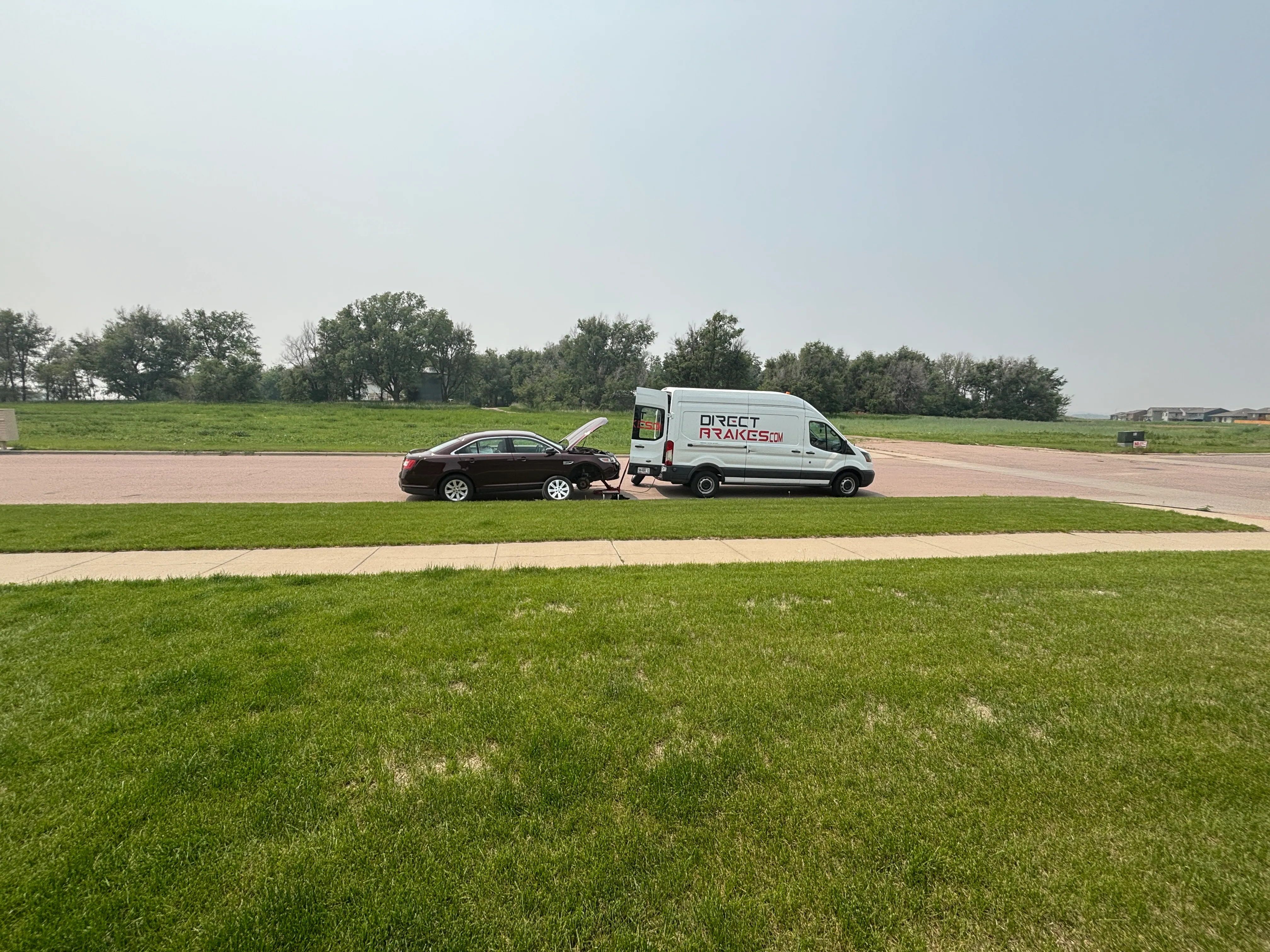
Car pulling when you brake? Call (605) 376-2130 — we'll diagnose it and fix it at your door, same day.
Car shaking when you brake?
We diagnose and fix it at your door. Same-day appointments available.
Get Free Quote (605) 376-2130