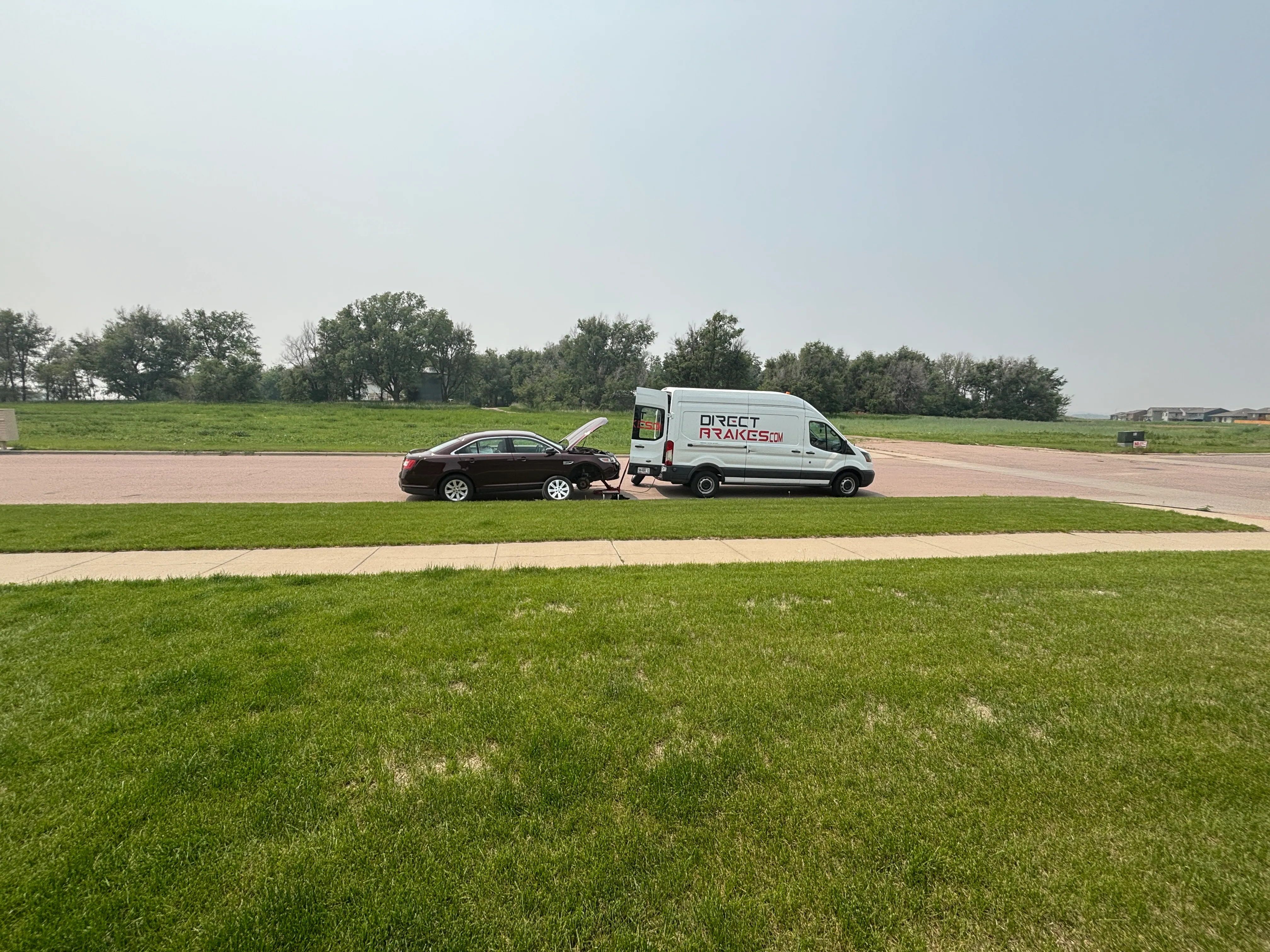
What are the signs of bad brakes? The 7 main warning signs are: squeaking or squealing sounds, grinding noise, car shakes when you stop, soft or spongy brake pedal, car pulls to one side, burning smell after braking, and brake warning light on your dashboard. If you notice any of these, get your brakes checked soon.
Your brakes talk to you. They make sounds. They feel different. They try to tell you when something is wrong.
Most people ignore these signs. They think the noise will go away. They hope it is nothing. But brake problems do not fix themselves. They get worse. And they get more expensive.
This guide will teach you the 7 warning signs. You will learn what each sign means. You will know when you need help right away. And you will know when you have a little time.
Let's start with the list.
The 7 Brake Warning Signs
- Squeaking or squealing when you press the brake
- Grinding noise that sounds like metal on metal
- Car shakes when you slow down
- Soft brake pedal that goes down too far
- Car pulls to one side when stopping
- Burning smell after you use the brakes
- Brake warning light on your dashboard
Now let's look at each sign. I will explain what causes it. I will tell you how bad it is. And I will tell you what to do.
1. Squeaking or Squealing When You Brake
This is the most common sign. You press the brake. You hear a high-pitched squeak. It sounds like a bird chirping or nails on a chalkboard.
What causes it? Your brake pads have a small piece of metal in them. This metal is called a wear indicator. When your pads get thin, this metal touches your rotor. That makes the squeaking sound.
Think of it like a built-in alarm. The car is telling you: "Hey! My brake pads are getting low!"
How Serious Is It?
Not an emergency. But do not wait too long.
You have about 2 to 4 weeks to get new brake pads. If you wait longer, the pads will wear out completely. Then you will damage your rotors. That costs a lot more money.
One exception: Sometimes brakes squeak in the morning. This is because of moisture. The squeak goes away after a few stops. This is normal. But if the squeak happens every time you brake, that is a problem.
What to do: Schedule a brake check within the next week or two. Do not panic. But do not forget about it either.
2. Grinding Noise When You Stop
Grinding is worse than squeaking. Much worse.
You press the brake. You hear a harsh, rough sound. It sounds like rocks in a blender. Or like two pieces of metal rubbing together.
What causes it? Your brake pads are gone. Completely gone. Now the metal part of the brake is rubbing directly on your rotor. Metal is grinding on metal.
This Is Serious
Stop driving as soon as you can.
Every time you press the brake, you are damaging your rotors. Rotors cost $200 to $400 each. Most cars have 2 or 4 rotors.
A simple brake pad replacement costs $150 to $300. But if you destroy your rotors, you will pay $500 to $1,000 or more.
What to do: Do not drive to the store. Do not drive to work. Call a mobile brake service or get your car towed. This is an emergency.
3. Car Shakes When You Slow Down
You are driving on the highway. You press the brake. Your steering wheel starts to shake. Or you feel a pulsing in the brake pedal. It feels like the car is vibrating.
What causes it? Your brake rotors are warped.
Rotors are the round metal discs behind your wheels. When you brake, your pads squeeze these discs. That is what slows your car down.
Heat makes rotors warp over time. Think of a flat pan on a hot stove. After many uses, the pan can bend a little. Rotors do the same thing.
When a rotor is warped, it is not flat anymore. So when the pad squeezes it, you feel bumps. That is the shaking you feel.
How Serious Is It?
Medium serious. Your brakes still work. But they do not work as well as they should.
Warped rotors also wear out your brake pads faster. And the shaking will get worse over time.
What to do: Get your brakes checked within a week. A mechanic can resurface your rotors (make them flat again) or replace them.
Worried About Your Brakes?
We come to you. Free brake inspections with any repair.
Call (605) 376-21304. Soft or Spongy Brake Pedal
You press the brake pedal. It goes down farther than normal. It feels soft. Like pressing on a sponge. Or the pedal slowly sinks to the floor when you hold it.
What causes it? There are a few possible reasons:
- Air in the brake lines. Brakes use fluid to work. If air gets into the lines, the pedal feels soft.
- Brake fluid leak. If fluid is leaking out, there is not enough to push your brakes.
- Bad master cylinder. This is the part that pushes fluid when you press the pedal. If it is failing, the pedal feels soft.
This Is Dangerous
Your brakes could fail completely.
A soft pedal means your brake system is not working right. If you lose all your fluid, you will have no brakes. This can happen suddenly.
What to do: Check your brake fluid level. Look under your hood. There is a small container near the back. It says "brake fluid" on the cap. If it is low or empty, you may have a leak.
Get your brakes checked right away. Do not drive far. If the pedal goes all the way to the floor, do not drive at all.
5. Car Pulls to One Side When Stopping
You press the brake. Your car wants to turn left. Or it wants to turn right. You have to hold the steering wheel to keep going straight.
What causes it? One side of your brakes is working harder than the other. This happens when:
- Stuck caliper. The caliper is the part that squeezes the brake pad. If it gets stuck, one side brakes more than the other.
- Collapsed brake hose. The hose brings fluid to your brake. If it collapses, fluid cannot flow to one side.
- Uneven brake pad wear. If one pad is more worn than the other, braking is uneven.
How Serious Is It?
Serious. Pulling makes your car harder to control. It also wears out your brakes and pads unevenly.
If one caliper is stuck, it might be dragging all the time. This wastes gas and creates a lot of heat.
What to do: Get your brakes checked within a day or two. A stuck caliper can overheat and cause more damage.
6. Burning Smell After Braking
You brake hard. Or you drive down a steep hill. Then you smell something. It smells like burning chemicals. Like hot plastic or a hot electrical wire.
What causes it? Your brakes are overheating. The pads get too hot. The brake fluid gets too hot. When things get too hot, they start to burn.
This happens more often when:
- You drive down long hills
- You brake hard over and over
- A caliper is stuck and the brake is always on
Stop and Let Them Cool
Pull over. Turn off your car. Wait 10 to 15 minutes.
When brakes overheat, they do not work as well. The brake fluid can actually boil. If that happens, you lose braking power. This is called "brake fade."
What to do: If this happens once on a steep hill, it might be okay. But if you smell burning during normal driving, get your brakes checked. You may have a stuck caliper.
7. Brake Warning Light on Your Dashboard
You look at your dashboard. There is a light on. It might say "BRAKE" in red letters. Or it might be a circle with an exclamation point. Or it might say "ABS."
What causes it? Different lights mean different things:
- BRAKE light (red): Could mean low brake fluid. Could mean your parking brake is on. Could mean a serious problem.
- ABS light (yellow): Your anti-lock brake system has a problem. Your regular brakes still work. But the ABS does not.
- Both lights on: This is more serious. Your whole brake system may have a problem.
What Does ABS Do?
ABS stands for Anti-lock Braking System. It stops your wheels from locking up when you brake hard. This helps you keep control of your car.
Without ABS, your wheels can lock. Your car will slide. You cannot steer.
First, check this: Make sure your parking brake is off. If the light is still on, check your brake fluid level.
What to do: If the light stays on, get your brakes checked soon. A mechanic can read the computer codes and tell you exactly what is wrong.
How Much Does Brake Repair Cost?
Many people ask: "How much will this cost?" Here is a simple breakdown:
Typical Brake Repair Costs
Brake pad replacement: $150 to $300 per axle
Brake pads and rotors: $350 to $600 per axle
Caliper replacement: $300 to $600 per caliper
Brake fluid flush: $100 to $150
Master cylinder: $400 to $700
Your car has two axles. The front axle has two wheels. The back axle has two wheels. Most brake wear happens on the front.
The key point: Fix problems early. A $200 repair can turn into a $800 repair if you wait too long.
When Should You Stop Driving?
Some brake problems are emergencies. Stop driving right away if:
- Your brake pedal goes all the way to the floor
- You see brake fluid leaking under your car
- You hear loud grinding every time you brake
- The brake pedal feels very different than normal
- Both your ABS light and brake light are on
- You smell burning during normal driving
In these cases, do not drive to a shop. Call for help. Have your car towed or call a mobile brake service.
How Can You Check Your Brakes at Home?
You do not need to be a mechanic. You can do a simple check yourself:
1. Listen. Roll down your windows. Drive slowly. Press the brake. Do you hear squeaking? Grinding? Any strange sounds?
2. Feel. Does the pedal feel soft? Does it go down too far? Does the car shake when you stop?
3. Look. Most wheels have openings. You can see the brake parts through these openings. Look at your brake pads. They should be at least 1/4 inch thick. If they look very thin, it is time for new pads.
4. Check your fluid. Open your hood. Find the brake fluid container. It is usually near the back, close to the windshield. The fluid should be between the "MIN" and "MAX" lines. If it is low, you may have a leak.
Quick Summary
Let's review what we learned:
- Squeaking means your pads are getting thin. Get them checked soon.
- Grinding means metal is hitting metal. Stop driving now.
- Shaking means your rotors are warped. Get them checked this week.
- Soft pedal means something is wrong with your hydraulic system. Get help right away.
- Pulling means one side brakes more than the other. Get checked in a day or two.
- Burning smell means overheating. Let them cool down. If it keeps happening, get help.
- Warning light means your car detected a problem. Get it checked soon.
Your brakes keep you safe. They keep your family safe. Do not ignore the warning signs. A small repair today can prevent a big problem tomorrow.