
Key Takeaways
- There is no single best brake pad — the right choice depends on your vehicle, driving style, and climate
- Organic pads are the cheapest and softest, come standard on most new cars, but wear fastest
- Semi-metallic pads have the best stopping power and heat resistance — right for towing, cold climates, and performance driving
- Ceramic pads are the quietest, produce the least dust, and last the longest under everyday conditions
- Ceramic pads have less cold bite than semi-metallic — in very cold climates that difference is real
- Upgrading from organic to ceramic at your next brake job is almost always worth the cost difference
Why Your Stock Pads Are Probably Not the Best Choice
Most people replace their pads with whatever the shop has on hand, or whatever came on the car originally. The problem is that original equipment brake pads — the ones installed at the factory — are almost always organic/NAO (non-asbestos organic) pads. Automakers choose them because they're cheap, quiet, and easy on rotors. Not because they last the longest or stop the best.
A brake job is one of the few times you can genuinely upgrade your car's performance without spending a lot of money. Understanding the three main pad types takes about 5 minutes and can save you from buying the wrong thing — or paying for another brake job sooner than necessary.
Braking is always a tradeoff
No single pad wins every category. More stopping power usually means more noise and more rotor wear. Quieter pads are often softer and wear faster. Knowing what you're trading off is the whole point of this guide.
Organic Brake Pads (NAO)
Stock / BudgetOrganic pads — also called NAO (non-asbestos organic) pads — are made from a blend of rubber, fiberglass, Kevlar fibers, carbon compounds, and resins bonded together under heat and pressure. They contain no metal, which is why they're the softest and quietest of the three types.
They're the default choice for automakers because they're inexpensive to manufacture, gentle on brake rotors, and quiet at low temperatures. They work well enough for light-duty use but hit their limits fast under any kind of demand.
Where organic pads work well
- Light city driving with frequent low-speed stops
- Drivers who put on low annual mileage
- Budget brake jobs where cost is the top priority
- Older vehicles where rotor preservation matters
Where organic pads fall short
- Wear out fast — often 25,000–35,000 miles vs. 50,000+ for ceramics
- Brake fade under heat — the pedal gets soft during heavy or sustained braking
- More brake dust — darker dust that coats wheels and requires frequent cleaning
- Not suited for towing or hauling — heat resistance is too low for the extra load
Semi-Metallic Brake Pads
Performance / TowingSemi-metallic pads are made from 30–65% metal content — typically steel wool, iron powder, copper, or other metallic alloys — mixed with graphite lubricant and resin as a binder. The metal component is what sets them apart: it conducts heat away from the rotor efficiently, which is why these pads perform better under stress than organic or ceramic.
Before ceramics became widely available, semi-metallic pads were the go-to upgrade for anyone wanting better performance. They still are for anyone putting serious demands on their brakes. The tradeoff is noise — metal-on-metal contact with the rotor means they're louder, especially when cold.
Where semi-metallic pads work best
- Towing and hauling heavy loads — extra weight requires more heat-resistant pads
- Cold climates — better cold bite means more friction before the brakes warm up
- Mountain or long downhill driving — heat resistance prevents brake fade
- Performance and spirited driving — firmer pedal feel, higher friction coefficient
- High-mileage work trucks and SUVs — durability under constant use
The real downsides
- Noisy — especially when cold or on light brake applications; squeak is common
- More rotor wear — harder metal compounds are more abrasive than ceramic or organic
- More brake dust — dark, sticky dust that gets on wheels and calipers
- Require bedding in — new semi-metallic pads need 300–500 miles of normal driving to reach full performance
Heat is the key advantage
Metal conducts heat away from the friction surface and into the surrounding air faster than ceramic or organic materials. Under sustained hard braking — long descents, repeated stops from high speed — semi-metallic pads maintain consistent performance where other types fade. If you've ever had brakes go soft after coming down a mountain road, you were experiencing brake fade. Semi-metallic pads are the fix.
Ceramic Brake Pads
Best for Most DriversCeramic pads are made from dense ceramic fibers — similar to pottery but harder and more heat-resistant — mixed with copper fibers and a bonding agent. The copper fibers serve two jobs: they increase friction and help conduct heat away from the pad surface. The result is a pad that's quiet, long-lasting, and consistent across a wide range of temperatures.
Ceramic pads were developed in the 1980s as an alternative to both organic and semi-metallic options. They've become the dominant choice for passenger cars and light SUVs because they solve the main complaints about both other types: organic pads wear too fast, and semi-metallic pads are too loud and too hard on rotors.
Why ceramic pads work well for most drivers
- Quiet — any noise produced is above the range of human hearing; much quieter than semi-metallic
- Light dust — produces fine, light-colored dust that doesn't stick to wheels like dark metallic dust
- Long pad life — typically 50,000–70,000 miles under normal use; outlasts organic pads significantly
- Consistent performance — stable friction coefficient across a wide temperature range
- Gentler on rotors — softer than semi-metallic, so rotors last longer
The real downsides of ceramic pads
- Higher upfront cost — typically $20–$40 more per axle than organic, though the longer life offsets this
- Less cold bite — friction is lower when the pads are cold; the first few stops of a cold morning will feel slightly less sharp than semi-metallic
- Not designed for extreme heat — they insulate rather than absorb heat, which can push thermal stress into the rotors and brake fluid over time under sustained heavy braking
- Not a performance pad — if you track your car or regularly make repeated hard stops from speed, ceramic pads aren't the right tool
Which Type Is Right for Your Situation?
Here's how to apply this to your actual driving. Pick the scenario that fits you best:
Daily commuter — mostly city or highway driving
Ceramic pads will outperform your stock organic pads in every category that matters for this use case. Quieter, longer-lasting, cleaner wheels. This is the most common upgrade we do.
Truck or SUV used for towing or hauling
Extra weight means more heat during braking. Semi-metallic pads are built for this. Ceramic pads in high-heat towing situations can push that heat into the caliper and fluid rather than dissipating it.
Cold climate driving — harsh winters, frequent sub-zero mornings
Cold bite matters here. Semi-metallic pads generate more friction before the brakes warm up, which translates to better stopping on cold first starts. The noise difference is less noticeable when it's already cold.
Mountain driving, long descents, or driving that involves sustained hard braking
This is exactly what semi-metallic pads were engineered for. Their heat dissipation advantage is most pronounced when brakes need to work hard for extended periods.
Very low mileage, budget-first, light city driving only
If you drive less than 8,000 miles a year on flat roads and cost is the primary concern, organic pads do the job. Just expect to replace them sooner.
Don't mix pad types on the same axle
Whatever you choose, use the same compound on both wheels of an axle. Mixing ceramic on one side and semi-metallic on the other creates uneven braking force, which pulls the car to one side during stops and causes uneven rotor wear.
Frequently Asked Questions
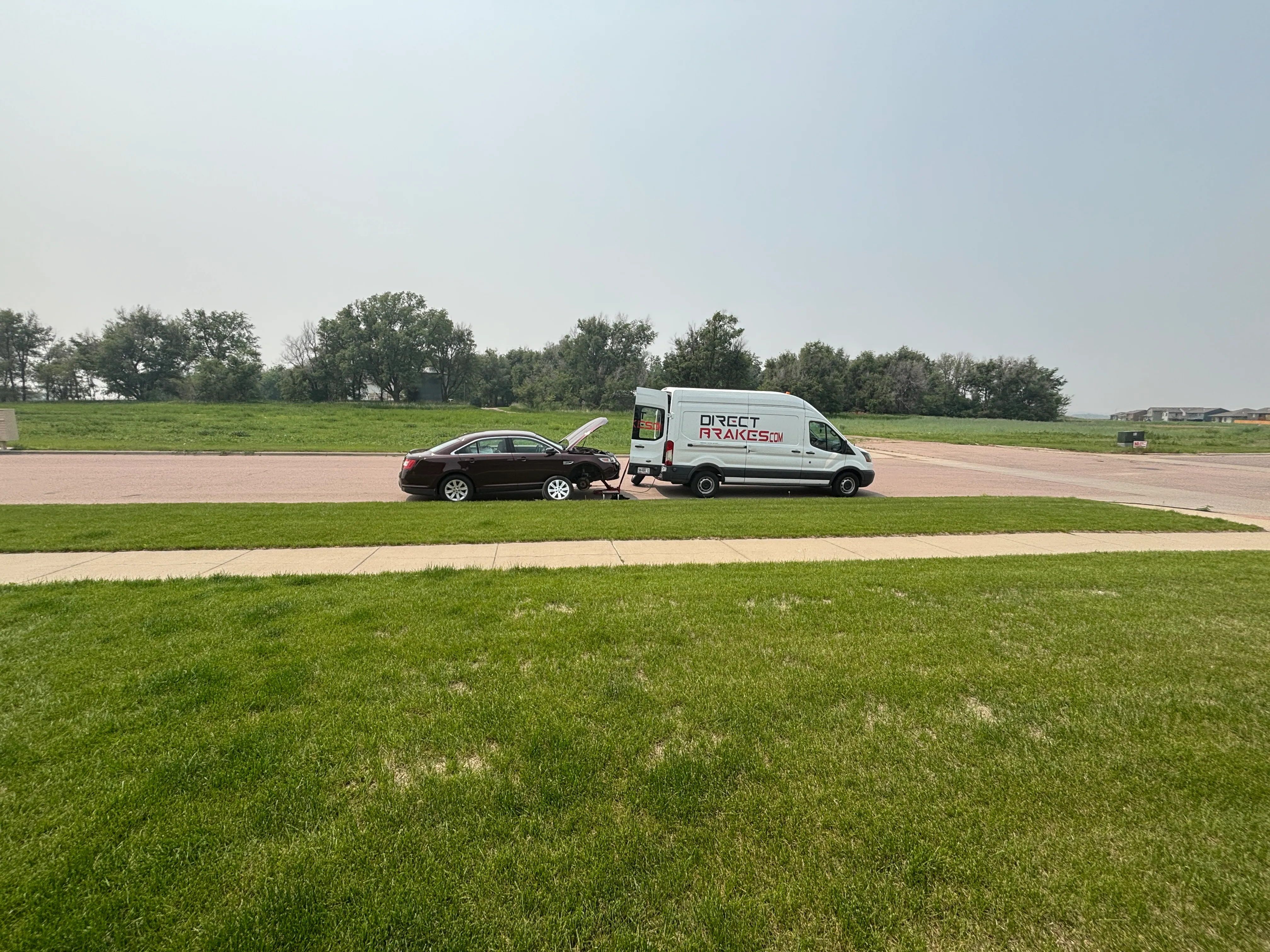
Not sure which pad type is right for your vehicle? Call (605) 376-2130 and we'll tell you exactly what we'd put on it — and why.
Ready for new brake pads?
We come to your home or office. Same-day appointments available.
Get Free Quote (605) 376-2130