
Key Takeaways
- The squeal is the cheap warning — wear indicator at 2–3mm. Act within 1–2 weeks. Don't wait for grinding.
- Grinding = metal on metal. Rotor damage is happening every stop. Same-day service.
- Vibration when braking = worn pads causing rotor damage, or already-warped rotors. Not just annoying — pad condition related.
- Longer stopping distance is a late-stage sign. If you notice this, pads are critically low.
- Waiting from squeal to grinding costs $150–$250/axle extra — scored rotors must be replaced instead of reused
High-Pitched Squeal When Braking
This is the most important sign to know — and the one that saves you the most money. The squeal is intentional. Brake pads have a small steel clip called a wear indicator built into the pad assembly. When the friction material wears down to 2–3mm remaining, this clip contacts the rotor surface and produces a high-pitched screech specifically when you apply the brakes. It's engineered to be annoying for exactly this reason: it wants you to notice it.
At the squeal stage, you still have usable pad material left — enough for approximately 1–2 weeks of normal driving. The squeal is your advance warning. Book service within the week. Don't treat it as background noise and keep driving. The cost of fixing brakes at the squeal stage: pads only, or pads and rotors if they're near minimum thickness — $150–$300 per axle.
What squeal is not the wear indicator: a very brief squeal on the first 1–2 stops each morning (surface rust on rotors, completely normal and harmless), and a constant squeal at all times whether braking or not (glazed pads, a stuck pad, or a debris shield making contact — different causes, different fixes). The wear indicator specifically squeals when you press the brake pedal.
Squeal on braking = wear indicator. Book service this week. Read more: brakes squeaking causes and fixesGrinding or Scraping Metal Sound When Braking
If the squeal was missed and brake pads wore through completely, you've reached grinding. The friction material is gone — the steel backing plate is now pressing directly against the rotor face on every stop. Every braking event is destroying the rotor surface in real time.
Grinding brakes are not a "watch and wait" situation. Rotor damage accumulates with every mile. A repair that costs $180–$280 per axle today becomes $350–$550 once the rotors are deeply scored and must be replaced rather than reused. If you have grinding along with a pulling sensation or a soft pedal, do not drive the vehicle — call for service at your location.
The one exception: a light grinding or scraping on the first 1–2 stops of the day that fully clears within a mile is surface rust on the rotor — iron oxidizes overnight, especially after rain. That's harmless and normal. Grinding that happens on every stop, gets worse, or is accompanied by any other symptom is not surface rust.
Grinding on every stop = worn pads, metal contact. Same-day service. Read more: is it safe to drive with grinding brakesVibration or Pulsing When Braking
A pulsing or vibrating sensation through the brake pedal or steering wheel when you apply the brakes points to a rotor problem — and worn brake pads are one of the most common causes. Here's the connection: when pads wear unevenly (from a partially stuck caliper, for example) or when pads are allowed to reach metal contact, the rotor surface develops uneven wear patterns — microscopic variations in thickness that cause the pedal to pulse at the caliper frequency as you brake. This is called disc thickness variation (DTV), often described as "warped rotors."
Where you feel it tells you which axle: vibration in the steering wheel = front brakes. Vibration through the pedal only = rear brakes. Both can indicate pad-related rotor wear.
Vibration when braking is not a cosmetic issue — the uneven rotor surface that causes the pulsing continues to get worse with heat cycling, and the pad wear becomes increasingly uneven as a result. Address it before it escalates. See our full car shaking when braking guide for every cause.
Steering wheel shakes = front rotors. Pedal pulses only = rear. Both are brake-related.Taking Longer to Stop Than Usual
This is a later-stage sign. If you're noticing that you need to press harder or earlier to stop at the same speeds you used to stop at, your brake pads are critically low — likely past the wear indicator threshold and approaching or at metal contact. The friction coefficient of a steel backing plate against a rotor is significantly lower than fresh pad compound against a rotor. Less friction = longer stopping distance.
Reduced stopping distance is dangerous in proportion to how much you're noticing it. A 5% longer stop in dry conditions might be subtle. In an emergency stop on a wet road, the same degradation can be the difference between stopping in time and not. If you're actively noticing your braking feels slower or requires more pedal effort, treat it as urgent — don't test how much worse it can get.
This symptom can also indicate a brake fluid issue (moisture-contaminated fluid with a lowered boiling point causing partial vapor lock under heavy braking) or a stuck caliper not applying full force. Both are worth inspecting alongside the pads.
Noticeably longer stops = pads critically low or fluid issue. Urgent inspection.Brake Pad Indicator Light On the Dashboard
Most modern vehicles — and virtually all European makes — have an electronic brake pad wear sensor built into the pad. When the friction material wears down to the sensor depth, the sensor wire contacts the rotor and the circuit completes, illuminating a warning light on the dashboard. It functions exactly like the mechanical wear indicator clip on non-sensor pads: it fires at 2–3mm of remaining pad material.
Treat the brake warning light with exactly the same urgency as a squeal: service within 1–2 weeks. Unlike the squeal indicator, the sensor is a one-time device — once it contacts the rotor and fires, the sensor itself is consumed and must be replaced along with the pads.
Note: distinguish between the brake pad wear light (orange/yellow icon that looks like a circle with small lines, or says "BRAKE PADS") and the red brake system warning light (which indicates brake fluid level, parking brake left on, or a hydraulic system issue). The red light is more urgent — if it appears while driving with no parking brake engaged, check brake fluid immediately. See our brake warning signs guide for the full breakdown by light color and icon.
Orange pad wear light = same urgency as a squeal, service within the week. Red brake light = check fluid now.Brake Pads Appear Thin Through the Wheel Spokes
You can visually check your brake pad thickness on most vehicles without any tools. Look through the wheel spokes at the caliper — you'll see the outer brake pad pressed against the rotor face. A new pad is 10–12mm of friction material. When you can see 3mm or less of pad material, replacement is due. At 2mm, the wear indicator fires. At 1mm or below, you're approaching metal contact.
What to look for: the friction material is the dark compound layer between the metal rotor and the metal backing plate. If the pad looks thin — about the thickness of a pencil eraser or less — it's time. If you can't distinguish any pad material and it looks like metal pressing against metal, you're at or past the wear indicator and need same-day service.
This visual check works best on vehicles with open spoke wheels. Solid wheel covers may make it difficult to see the caliper. In that case, rely on the squeal indicator or schedule a measurement at your next service. A tech measures pad thickness with a gauge to get exact millimeter readings rather than estimating visually.
3mm visible = replace now. Less than that = urgent. Can't see pad material at all = same-day.Car Pulls to One Side When Braking
When a car pulls left or right specifically during braking — it tracks straight when not braking, but drifts when you press the pedal — the cause is almost always uneven braking force side to side on the same axle. This is a brake pad problem in most cases, and it's usually driven by one of two culprits.
Uneven pad wear: If pads on one side of the axle are worn significantly more than the other (common with a partially stuck caliper slide pin), the worn side generates less friction per stop. The side with more friction pulls the vehicle toward it during braking. When you check pad thickness on both sides and one is at 2mm while the other is at 7mm, uneven wear is confirmed.
Seized caliper or collapsed brake hose: A caliper that isn't releasing fully stays clamped on one side, wearing the pad down faster and generating more braking force on that corner than the other side. A collapsed brake hose acts as a one-way valve — fluid flows in to apply the caliper but can't fully release — creating a similar effect. Either way, the result is a brake pull and accelerated one-side wear. The caliper or hose needs to be replaced along with the pads. See our car pulling when braking guide for the full diagnosis.
Pulling during braking = uneven pad wear or caliper/hose issue. Inspect both sides.All 7 Signs at a Glance
Why the squeal matters: the cost of waiting
Frequently Asked Questions
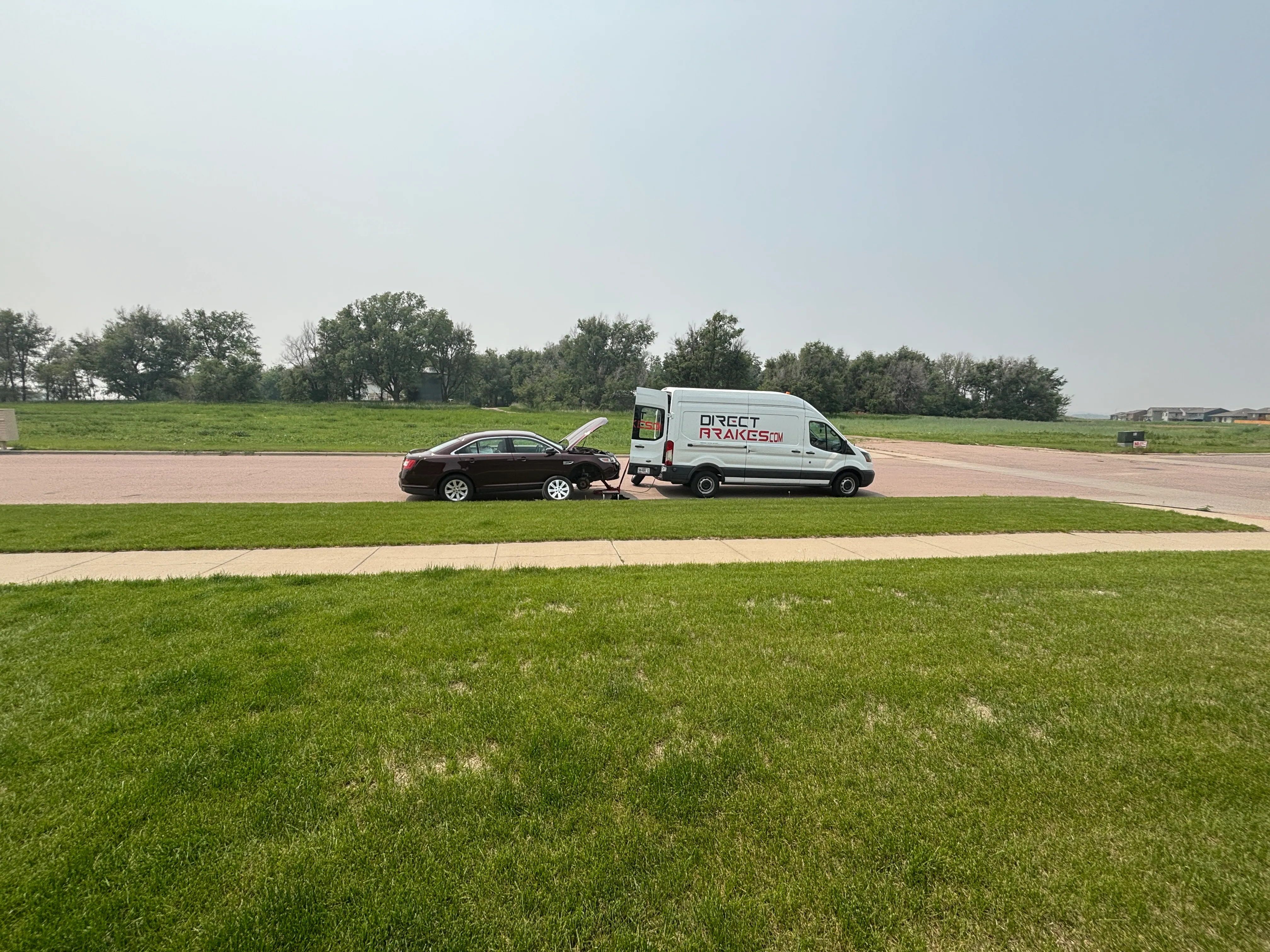
Car pulling when you brake? Call (605) 376-2130 — we'll diagnose it and fix it at your door, same day.
Seeing any of these signs?
We diagnose and fix it at your door. Same-day mobile brake service in Sioux Falls and Omaha.
Get Free Quote (605) 376-2130