
Key Takeaways
- Do not drive with a soft, spongy, or low brake pedal — hydraulic pressure is compromised and stopping power is unpredictable
- This is a hydraulic failure, not a pad problem — the cause is somewhere in the fluid system, not the friction components
- Most common cause: air in the brake lines — compresses under pedal pressure, unlike fluid
- The pump test: if pumping the pedal firms it up temporarily, air or a slow leak is almost certainly the cause
- Master cylinder failure is the most serious and expensive cause — internal leaks are hard to detect without inspection
Soft pedal vs. worn pads — different problem entirely
Worn brake pads cause squealing, grinding, vibration, and longer stopping distances — but the pedal feel stays firm. A soft, spongy, or low pedal is a hydraulic problem: the fluid system that generates stopping force is leaking, contaminated with air, or mechanically failing. Pads don't cause this. These are different systems, different diagnoses, different fixes.
The Pump Test: Your First Diagnostic Step
Before anything else, do this: with the vehicle stopped, pump the brake pedal rapidly 3–4 times, then hold steady pressure on the last pump.
If the pedal firms up when pumped, then slowly sinks or goes soft under steady pressure: air in the brake lines or a slow internal leak is almost certainly the cause. Air compresses under pedal pressure — pumping moves the air bubble temporarily, giving a firmer pedal, but holding pressure lets the air re-compress and the pedal sinks again. This is the most diagnostic single test you can do.
If the pedal is soft from the first press and pumping doesn't help: the problem is more likely a significant fluid loss (external leak from a brake line, caliper, or wheel cylinder) or a master cylinder failure. The system has lost enough fluid volume that pumping can't compensate.
If the pedal suddenly dropped to the floor mid-drive and stayed there: this is a sudden catastrophic failure — burst brake line, caliper blowout, or complete master cylinder failure. Do not drive. Pull over safely and call for service.
Any soft or low pedal — do not drive. Call for mobile service or tow.Air in the Brake Lines — Most Common Cause
Brake fluid is incompressible — when you press the pedal, force transfers directly through the fluid to the caliper pistons with no loss. Air is compressible. When an air bubble enters the brake lines, pressing the pedal first compresses the air before any force reaches the calipers. The pedal travels further, feels spongy, and braking power is reduced in proportion to the size of the air pocket.
How air gets in: most commonly during a brake job where a caliper was replaced and the lines weren't bled properly afterward. Also from a brake line that was cracked or disconnected, from letting the master cylinder reservoir run dry, or from a caliper piston that was pushed back too aggressively without opening the bleed valve. Brake fluid also absorbs moisture over time — old fluid with high moisture content can boil under sustained heavy braking, creating vapor pockets (gaseous bubbles) that behave exactly like air. This is why brake fluid replacement every 2–3 years matters.
The fix: brake system bleeding — a process where fresh fluid is pushed through the system from the master cylinder to each caliper bleed valve, pushing air out ahead of it. A thorough four-wheel bleed takes 30–45 minutes. This is the most common brake hydraulic repair and resolves the spongy pedal completely in the vast majority of air-in-lines cases.
Cost: $80–$130 for a full brake bleed and fluid replacement at most shops. If a caliper was just replaced and the lines weren't bled, that's a warranty callback — the shop should do it at no charge.
Pump firms up then sinks = air in lines. Fix: bleed the system. If recent brake work was done, call back the shop.Leaking or Damaged Brake Line
Steel brake lines run from the master cylinder to each wheel. They're durable but not immune to corrosion — rust forms on the outside of the line over years of exposure to road salt, moisture, and debris, eventually pitting through the wall and creating a pinhole leak. In northern climates with heavy winter road salt use, brake line corrosion is a common failure on vehicles over 8–10 years old.
A leaking brake line loses fluid volume — and lost volume means lost hydraulic pressure. The pedal goes progressively lower as fluid escapes. In a fast leak, the pedal can drop to the floor within a single stop. Signs of a brake line leak beyond the soft pedal: a puddle of clear to slightly yellow fluid under the vehicle (not engine oil, not coolant — brake fluid is thinner and lighter), a wet or stained appearance on a brake line during visual inspection, or the brake fluid reservoir dropping noticeably over a short period without any visible caliper or wheel cylinder leak.
The fix: the affected section of brake line must be repaired or replaced. Steel line repair with a compression fitting is a short-term fix. Full section replacement with new steel or stainless line is the proper repair. Cost varies by location of the leak and how much line needs replacing — $150–$400 for a section repair is typical. Full brake system lines on heavily corroded vehicles can run higher.
Brake line leak = do not drive. Fluid loss can accelerate suddenly and eliminate stopping power.Leaking Disc Brake Caliper
Disc brake calipers contain one or more hydraulic pistons that press the brake pads against the rotor. Each piston is sealed by a rubber dust boot and piston seal. These seals degrade over time — especially in vehicles where brake fluid hasn't been changed regularly (moisture-contaminated fluid accelerates seal corrosion from the inside). When a caliper seal fails, brake fluid leaks past the piston.
A caliper leak causes two symptoms simultaneously: a soft or low pedal from fluid loss, and often a brake pull toward the leaking side (as that caliper loses hydraulic pressure, it applies less force than the opposite side, and the car pulls toward the stronger side). Look for wet or stained brake dust behind one specific wheel — fresh brake fluid mixed with road grime has a distinctive oily, dark brown appearance at the caliper or behind the wheel.
The fix: caliper replacement. Caliper rebuild kits exist but are generally not cost-effective vs. a remanufactured caliper. The leaking caliper is replaced along with the pads on that corner (the pads will be contaminated with fluid) and often the rotor (which may be scored or contaminated). Cost: $300–$550 per axle including pads, rotor, and caliper. After replacement, the system must be bled. See our caliper inspection guide for how to diagnose before calling.
Soft pedal + brake pull = suspect caliper leak. Look for wet grime at one specific wheel.Worn or Failed Master Cylinder
The master cylinder is the hydraulic pump at the heart of the brake system. It converts pedal force into fluid pressure and distributes that pressure to all four wheels. Inside are two pistons with rubber cup seals that must hold pressure on every brake application. When those seals fail, pressure bleeds off — either externally (visible leak at the master cylinder or into the brake booster) or internally (the piston seal bypasses, allowing fluid to flow past the piston without generating pressure).
The internal leak is the more insidious failure: fluid stays inside the system, the reservoir doesn't visibly lose fluid, and there's no wet spot to find — but the pedal goes progressively lower and softer because the piston can't maintain pressure. The diagnostic clue: pedal that slowly sinks to the floor under steady pressure even after a fresh brake bleed. If you bleed the system, firm up the pedal, and it sinks back down within a few applications — the master cylinder is bypassing internally.
Master cylinder failure on older vehicles is often accompanied by brake fluid seeping into the brake booster (the large vacuum-assisted power brake unit mounted behind the master cylinder). If you smell brake fluid inside the cabin or notice a spongy pedal that seems connected to a slight fuel-smell, this combination is happening.
The fix: master cylinder replacement, followed by a full system bleed. Cost: $200–$450 parts and labor depending on vehicle. European vehicles and trucks run higher. Brake booster replacement (if fluid contaminated it) adds $150–$350.
Pedal sinks under steady pressure after a fresh bleed = internal master cylinder failure.Leaking Wheel Cylinder (Rear Drum Brakes)
Some vehicles — particularly trucks, older sedans, and economy cars — have disc brakes on the front and drum brakes on the rear. Drum brake systems use a wheel cylinder instead of a caliper: a small hydraulic cylinder inside the drum that pushes brake shoes outward against the drum surface when the pedal is pressed.
Wheel cylinders have two pistons and rubber cup seals, similar to caliper pistons. Corrosion from age and moisture-contaminated fluid causes these seals to fail. A leaking wheel cylinder causes brake fluid to contaminate the brake shoes inside the drum (requiring shoe replacement) and contributes to a soft or low pedal from fluid loss.
The sign specific to a wheel cylinder leak: fluid visible inside the drum when the drum is removed for inspection, or fluid-saturated brake shoes. Because this leak is inside the drum, it may not be visible externally — but a wet, dark stain on the inside face of the drum or backing plate is the tell.
The fix: wheel cylinder replacement plus new brake shoes (contaminated shoes cannot be reused). Cost: $120–$220 per side including parts and labor. If both rear wheel cylinders are at the same mileage and one has failed, both should be replaced at the same time.
Rear Drum Brake Shoe Adjustment
This one applies only to vehicles with rear drum brakes, and it produces a distinctive pattern: the pedal feels low or soft, but pumping the pedal several times firms it up considerably — and it stays firmer for the rest of the drive. The next cold start, the pedal is low again until pumped.
The cause: drum brake shoes that are out of adjustment sit too far from the drum surface. When you first press the pedal, the hydraulic system has to move the shoes a larger distance before contact is made — consuming pedal travel before any braking force is generated. The pump-up behavior firms the pedal because pumping mechanically moves the shoes closer to the drum, reducing the gap.
Modern drum brakes have an automatic adjuster that should maintain correct shoe-to-drum clearance as shoes wear. When this adjuster sticks or fails (common on vehicles where the parking brake isn't used regularly), the shoes fall progressively out of adjustment. The fix: manually adjust the rear shoes to correct clearance and service or replace the automatic adjuster mechanism. Using the parking brake regularly — even just once a week — engages the adjuster and prevents this issue.
Pump firms it up on cold starts, then stays OK = rear shoe adjustment. Cheapest fix of all 7 causes.ABS Hydraulic Modulator Malfunction
ABS (anti-lock braking system) equipped vehicles have a hydraulic modulator unit — sometimes called the ABS pump or ABS module — that sits between the master cylinder and the individual wheel circuits. It contains multiple solenoid valves that modulate pressure to each wheel independently during an ABS event (preventing wheel lockup on slippery surfaces).
When an ABS modulator valve sticks open, fails internally, or becomes contaminated with debris from degraded brake fluid, it can bleed pressure from the brake circuit — causing a soft pedal even when the rest of the brake system is in good condition. The ABS warning light will typically illuminate alongside the pedal problem, which is a useful diagnostic clue. A pedal that goes soft and comes back with no clear fluid leak, combined with an ABS light, points toward the modulator.
ABS modulator diagnosis requires a scan tool to read ABS fault codes — not all generic OBD-II readers access ABS modules. Repair can range from solenoid replacement ($200–$400) to full modulator assembly replacement ($400–$1,200 depending on vehicle). This is the most expensive cause on this list and requires a shop with ABS-capable diagnostic equipment.
Important: do not assume ABS modulator failure without ruling out simpler causes first. Air in lines and caliper leaks are far more common and much cheaper to fix. ABS modulator is a diagnosis of exclusion — after the rest of the system checks out clean.
All 7 Causes at a Glance
Frequently Asked Questions
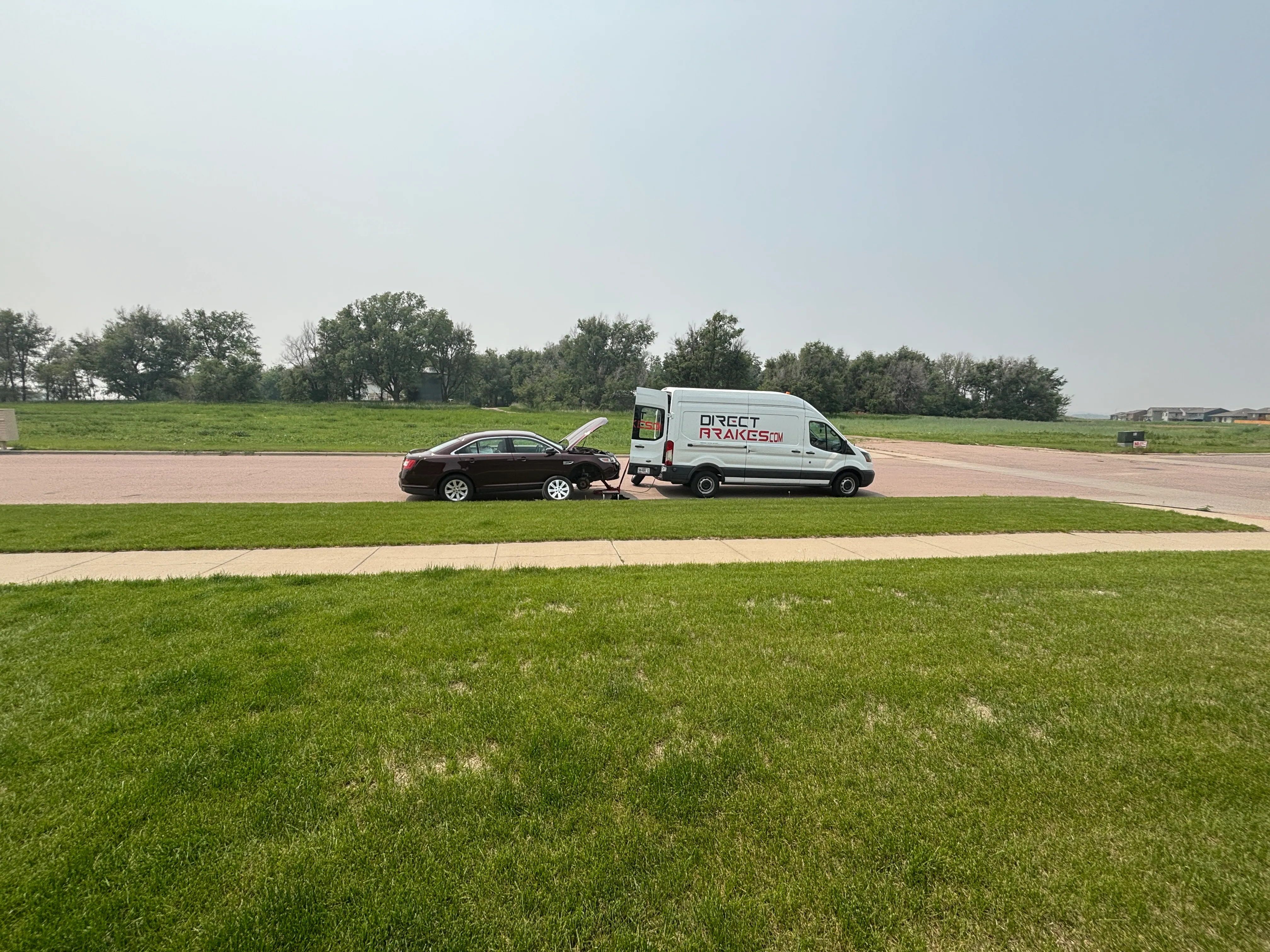
Car pulling when you brake? Call (605) 376-2130 — we'll diagnose it and fix it at your door, same day.
Soft pedal? We diagnose at your door.
Air in lines, caliper leaks, master cylinder — we find the cause and fix it same day in Sioux Falls and Omaha. No shop trip.
Get Free Quote (605) 376-2130