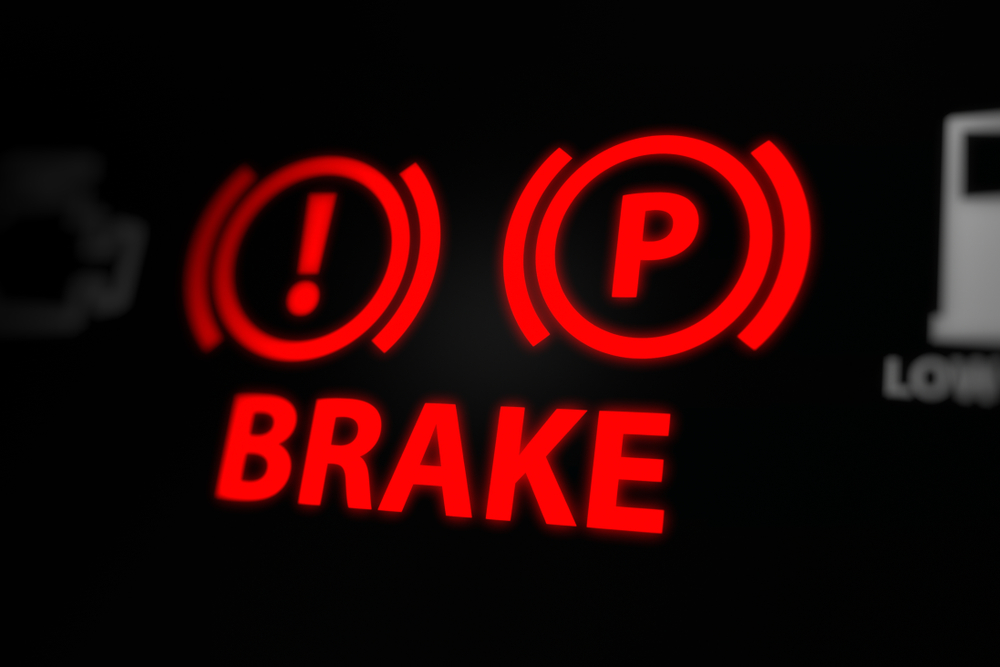
Your dashboard just lit up with a brake warning. Now your heart's doing the same thing. Is it serious? Can you keep driving? How much is this going to cost?
Here's the thing: not all brake lights mean the same thing, and the difference between them matters. One light might mean your parking brake is on. Another might mean your brakes are about to fail. Knowing which is which takes about two minutes — and could save you from an expensive mistake or a dangerous situation.
This is the guide a mechanic would walk you through on the phone. Let's go light by light.
The 4 Brake Dashboard Lights — What Each One Means
Most vehicles have up to four different brake-related warning lights. They look similar but mean very different things. Here they are from most serious to least:
This is your main brake system warning light — the one that signals a real problem. When it's on and your parking brake is fully released, something inside your brake system needs immediate attention.
Your brakes may still work right now, but the situation can change quickly. Drive as little as possible until you know what's causing it.
- Brake fluid level is low (most common)
- Brake fluid leak in the system
- Brake pads worn to sensor level
- Master cylinder failure or pressure loss
- Parking brake sensor stuck "on"
The ABS light means your anti-lock braking system has detected a fault. The important distinction: your regular brakes still work normally with this light on. You haven't lost your ability to stop.
What you've lost is the safety feature that prevents wheel lockup during panic stops. On wet or icy roads, this matters significantly. Get it checked within a week.
- Faulty wheel speed sensor (most common)
- Damaged ABS tone ring
- Low brake fluid affecting ABS module
- ABS module failure
- Wiring issue to ABS sensor
Before anything else — check your parking brake. On most vehicles, the red brake light and the parking brake light are the same light. A fully engaged parking brake will trigger it every time.
On cars, the parking brake is typically a handle near the center console. On trucks and SUVs, it's usually a foot pedal on the far left of the driver's floor. Make sure it's fully released.
- Parking brake cable needs adjustment
- Parking brake sensor is faulty
- Low brake fluid triggering the shared light
This amber light is specifically telling you your brake pads are getting thin. Not dangerously thin yet — but thin enough that the wear sensor is contacting the rotor. You have some time, but not weeks.
Not all vehicles have this light. Many just go straight to squealing sounds as their warning. If yours has it and it's on, schedule brake service within 1–2 weeks.
- Brake pads have reached their minimum thickness sensor point
- Without action, pads will continue wearing to metal-on-metal
- Catching it at this stage keeps rotor replacement out of the equation
What to Do When the Light Comes On
The right response depends on which light is on and what your brakes feel like. Here's the exact sequence to follow:
Check the Parking Brake First
Before anything else — make sure your parking brake is fully released. On many vehicles, the parking brake and brake system share the same warning light. This is the most common false alarm.
Test Your Brake Pedal
Press the brake pedal firmly. Does it feel normal? Solid and firm? Or is it soft, spongy, or going closer to the floor than usual? A soft pedal with a warning light means hydraulic pressure loss. Do not drive.
Check Brake Fluid Level
Pop the hood and locate the brake fluid reservoir — it's a small translucent plastic tank near the back of the engine bay, usually on the driver's side. Check if the fluid is between the MIN and MAX lines. Low fluid is the most common cause of the red brake light.
Identify Which Light Is On
Match what you see to the four lights above. Red brake light with normal pedal feel — get service soon. Red light with soft pedal — stop driving. ABS light — drive carefully to a shop. Amber pad light — schedule service this week.
Call for Mobile Service or Drive to a Shop
If you're not sure what's going on or your pedal feels off at all, don't risk driving to a shop. A mobile mechanic can come to your location, diagnose the issue, and repair it on the spot — no tow needed.
Can You Drive With the Brake Warning Light On?
It depends entirely on the light and how your brakes feel. Here's the clear breakdown:
- It's the parking brake light and your parking brake is off
- Only the ABS light is on with normal pedal feel
- Amber pad wear light with no other symptoms
- Red light came on briefly, then turned off
- Pedal feels soft, spongy, or goes low
- Red brake light on with grinding or pulling
- Fluid is visibly low with the light on
- Any brake warning light plus smoke or burning smell
Brakes can feel completely normal right up until they don't. A brake light that's been on for a week without obvious symptoms has still been telling you something is wrong. Don't wait until you feel it — by then, the repair is usually more expensive and the risk is real.
What It Costs to Fix — By Cause
Here's what each common brake warning light cause typically runs with Direct Brakes mobile service versus a traditional shop:
| Cause | What's Needed | Mobile Cost | Shop Cost (Est.) |
|---|---|---|---|
| Low brake fluid only | Fluid top-off + inspection for leaks | $20–$60 | $40–$100 |
| Worn brake pads | Pads + rotors (per axle) | $180–$280/axle | $280–$450/axle |
| Brake fluid flush | Full fluid flush + replacement | $80–$130 | $100–$200 |
| ABS wheel speed sensor | Sensor replacement | $150–$280 | $200–$400 |
| Master cylinder replacement | Full master cylinder + bleed | $250–$450 | $350–$700 |
| Brake fluid leak repair | Leak source + line or caliper repair | $150–$500+ | $250–$800+ |
The most common scenario — worn pads triggering a low fluid warning — runs $180–$280 per axle with our mobile service. That includes parts, labor, and a 12-month warranty. We come to your driveway, and it's done in about 90 minutes.
Not Sure What Your Brake Light Means?
We can come to your location in Sioux Falls, Brandon, Tea, or Harrisburg — diagnose the issue on the spot and give you a straight answer. No shop visit required.
Common Scenarios — What's Actually Going On
These are the exact situations we get calls about most. Find yours:
Almost always low brake fluid. The fluid level drops gradually as brake pads wear down — the calipers extend further and displace fluid. The fix is often just new pads, which brings the fluid level back up. Get it checked soon. Brakes can feel fine right up until they don't.
This usually signals hydraulic pressure loss on one side of the system, or brake fluid that's critically low in the master cylinder. This is more urgent. If pressing the pedal is what triggers the light, you may be losing fluid pressure actively. Drive as little as possible and get it inspected today.
Your core brakes are fine. Your ABS system has a fault — most often a wheel speed sensor that's gone bad. You can drive carefully to a shop, but be more cautious on wet or slippery roads since your anti-lock feature won't kick in if you need it.
When both lights come on at the same time, it often points to a more significant brake system problem — possibly a failing master cylinder or severe fluid loss. Treat this as urgent. If your pedal feels soft at all, do not drive.
You've already ruled out the most common harmless cause. From here, check your brake fluid level. If it's between MIN and MAX, you likely have a faulty parking brake sensor or low-fluid sensor. If it's below MIN, top it up and get the underlying cause diagnosed — fluid doesn't disappear, it goes somewhere.