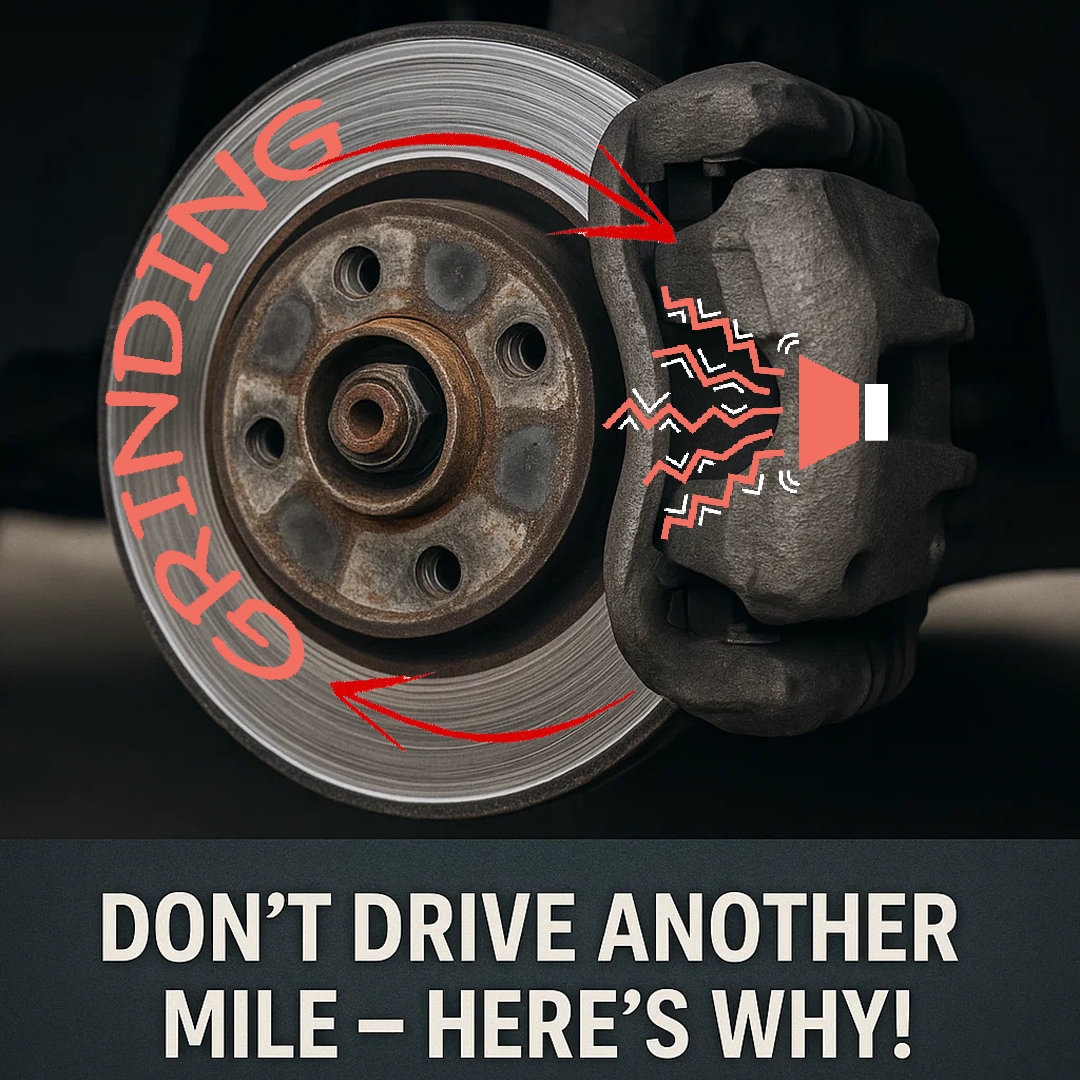
Why are my brakes grinding? Grinding brakes mean your brake pads have worn down completely. The metal backing of the pad is now rubbing directly on the metal rotor. This damages your rotors with every stop. Do not drive. Get the brakes fixed right away to avoid a much bigger repair bill.
That grinding sound is your car screaming for help. It is not just annoying. It is a warning that something is very wrong.
When you hear grinding, it means the soft part of your brake pad is gone. All that is left is a thin metal plate. That metal plate is now scraping against your rotor every time you stop.
This is called "metal-on-metal" contact. And it is bad news.
This Is an Emergency
Grinding brakes are not something you can "deal with later." Every time you press the brake pedal, you are carving grooves into your rotors. What starts as a $200 brake pad job can turn into a $1,500 repair in just a few miles of driving.
If your brakes are grinding right now, stop driving as soon as you safely can.
What Causes Grinding Brakes?
Brake pads are not meant to last forever. They are designed to wear down over time. That is how they work. The friction that stops your car slowly wears away the pad material.
Most brake pads have a built-in warning system. It is a small metal tab called a "wear indicator." When your pads get low, this tab touches the rotor and makes a squeaking sound. That squeak is telling you: "Replace me soon."
But if you ignore the squeak, the pad keeps wearing down. Eventually, all the friction material is gone. Now the metal backing plate of the pad is rubbing directly on the rotor.
That is the grinding sound you hear.
Other Causes of Grinding
While worn pads are the most common cause, grinding can also come from:
- Debris stuck between pad and rotor: A rock or piece of metal can get lodged in there
- Rust on the rotors: If your car sits for a while, rust can form and cause grinding for the first few stops
- Worn or warped rotors: Rotors that are too thin or damaged can cause noise
- Stuck caliper: If the caliper sticks, it can push the pad against the rotor constantly
But in most cases, grinding means the same thing: your brake pads are gone and you need new ones now.
The 3 Stages of Brake Wear
Brakes do not fail all at once. They give you warnings. Here is what happens:
Early Warning - Squeaking
What you hear: High-pitched squeal when you brake
What is happening: The wear indicator tab is touching the rotor. Your pads are getting low but are not gone yet.
Damage: None yet. This is just the warning.
Action: Schedule brake service within the next 500 miles.
Getting Worse - Occasional Grinding
What you hear: Grinding sound on hard stops or when braking downhill
What is happening: The pad is almost gone. Metal-on-metal contact is starting.
Damage: Light scratches and scoring on your rotors are starting.
Action: Get brakes fixed this week. Rotors may need resurfacing.
Emergency - Constant Grinding
What you hear: Loud grinding every time you brake
What is happening: The pad friction material is completely gone. Metal is grinding on metal with every stop.
Damage: Deep grooves in rotors. Possible caliper damage. Risk of brake failure.
Action: STOP DRIVING. Get emergency brake service immediately.
How Every Mile Costs You More Money
Here is the part that hurts your wallet. The longer you drive on grinding brakes, the more expensive the repair gets.
Think about that. A simple brake pad replacement costs around $200. But if you keep driving on grinding brakes for just 100 miles, you could be looking at a $1,000+ repair bill.
That is 5 times more expensive. Just because you kept driving.
Why Does the Damage Happen So Fast?
At highway speeds, your wheels spin about 600 times per mile. That means your rotors go around 600 times per mile too.
If metal is grinding on metal, that is 600 chances per mile to carve grooves into your rotors. The damage adds up fast.
Hearing Grinding Right Now?
We come to you with all the parts needed. Same-day service available.
Call (605) 376-2130What Gets Damaged When You Keep Driving
Metal-on-metal grinding does not just hurt your rotors. It can damage several expensive parts:
Rotors
Rotors are the metal discs that your brake pads squeeze to stop the car. When metal grinds on them, it carves deep grooves. Once the grooves are too deep, the rotors cannot be fixed. They have to be replaced.
Cost to replace rotors: $150 to $300 per axle (on top of pad cost)
Calipers
Calipers are the parts that push the brake pads against the rotors. When pads wear down completely, the caliper piston can push too far out of its housing. This can cause brake fluid to leak.
Once that happens, the caliper is ruined and must be replaced.
Cost to replace calipers: $200 to $400 each (most cars have 4)
Brake Lines
If a caliper fails and leaks fluid, it can damage the brake lines too. This is rare but possible with severe neglect.
Cost to replace brake lines: $150 to $500 depending on which lines
The Worst Case
If you ignore grinding brakes long enough, the brake pads can fall apart completely. The metal backing can even get ejected from the caliper. When this happens, you have almost no braking power.
This is not a scare tactic. It really happens. And when it does, you cannot stop your car.
What to Do When Your Brakes Start Grinding
If you hear grinding, here is what to do:
Stop Driving As Soon As Safely Possible
Do not panic. Do not slam on the brakes. Slow down gently and pull over to a safe spot. If you are close to home or work, drive there slowly. If not, find a parking lot.
Do Not Try to Look at the Brakes Right Away
After driving, your brakes are very hot. Rotors can reach 800°F or more. Do not touch them. Do not try to take off the wheels. Let everything cool down for at least 30 minutes.
Call for Service
Call a mobile brake service or tow the car to a shop. Do not drive it any further than you absolutely have to. Every mile makes the damage worse.
Get a Full Inspection
Ask the mechanic to check the pads, rotors, and calipers on all four wheels. Sometimes damage is worse than it sounds. Sometimes it is not as bad. A full inspection tells you exactly what needs to be fixed.
Can You Drive on Grinding Brakes?
The short answer: You should not.
The longer answer: If you absolutely have to move the car a short distance to get somewhere safe, drive very slowly and leave lots of space between you and other cars. Avoid heavy braking. Coast to stops when possible.
But understand that every time you press the brake pedal, you are causing more damage. The goal is to stop driving as soon as possible, not to see how far you can get.
Signs You Need to Stop Immediately
Pull over right away if you notice any of these:
- Brake pedal goes to the floor
- Brake pedal feels soft or spongy
- You smell burning
- You see smoke coming from a wheel
- The car pulls hard to one side when braking
- Brake warning light comes on
These are signs of serious brake system failure. Do not continue driving. Pull over and call for help.
How to Prevent Grinding Brakes
Grinding brakes do not happen overnight. They happen because warning signs were ignored. Here is how to avoid this problem:
Listen for Squeaking
That high-pitched squeal is not just annoying. It is your brakes telling you they need attention soon. When you hear it, schedule service within the next week or two.
Get Regular Brake Inspections
Have your brakes checked at least once a year, or every 12,000 to 15,000 miles. Many shops do this for free. A quick check can catch problems before they become expensive.
Pay Attention to How Your Car Feels
If stopping takes longer than it used to, if the pedal feels different, or if you feel vibrations when braking, those are early warning signs. Do not ignore them.
Do Not Push Your Luck
Brake pads last 30,000 to 70,000 miles depending on how you drive. If you know your pads are getting old, replace them before they start grinding. It is much cheaper that way.
Quick Summary
What You Need to Know
- Grinding brakes mean your brake pads are completely worn out
- Metal is now grinding on metal, damaging your rotors
- Every mile you drive makes the damage worse
- A $200 brake pad job can become a $1,000+ repair if you keep driving
- Stop driving as soon as you safely can
- Do not touch the brakes right after driving - they are extremely hot
- Call for service and get a full inspection
- Listen for squeaking in the future - that is the early warning
Grinding brakes are not something to mess with. Your brakes are the most important safety system in your car. When they tell you something is wrong, listen.