
Key Takeaways
- Brake pull is almost always caused by uneven braking force — one side gripping significantly harder than the other
- A seized brake caliper is the most common culprit — it either grabs too hard or doesn't release after you lift your foot
- A collapsed brake hose can look completely fine on the outside while trapping pressure inside — the pull gets worse over time
- Contaminated brake pads cannot be cleaned and re-used — the rotor is contaminated too and needs to be replaced
- Uneven pad wear between left and right is always a symptom of something mechanical, not normal use
Why brakes pull — the core mechanic
Your braking system is designed to apply equal force to both sides of each axle simultaneously. When one side generates more or less stopping force than the other, the car naturally rotates toward the higher-friction side — the same way a shopping cart with a sticky wheel turns toward that wheel. The diagnostic job is identifying which component broke that symmetry.
Seized or Sticking Brake Caliper
This is the number one cause of brake pull, by a significant margin. The caliper is the hydraulic clamp that squeezes your brake pads against the rotor when you press the pedal. It slides on a pair of guide pins that must move freely for the caliper to apply and fully release. When those pins corrode — from age, water intrusion, or missing boot seals — the caliper can stick in two distinct ways, both producing a pull.
Stuck open (won't fully release): The caliper keeps the pad in partial contact with the rotor after you lift your foot. That side drags continuously, runs hot, and grabs sooner than the other side when you brake again. You'll notice the pull every time you brake, plus a burning smell from that corner and a wheel that's much hotter than the others.
Stuck closed (won't fully apply): The caliper can't clamp down properly, so that wheel contributes less stopping force. The car pulls toward the opposite side — the side that's working correctly.
How to confirm it
After a 10-minute drive, carefully hold your hand near each wheel (don't touch — rotors can be 300°F+). A stuck caliper will radiate noticeably more heat on one side. If you can safely spin a rear wheel by hand with the car off and parking brake released, compare resistance between left and right — excess resistance on one side confirms a dragging caliper.
The fix
Mild cases: slide pins cleaned, greased, and boots replaced — typically $80–$150 in labor. If the caliper piston is corroded internally, the caliper needs replacement — $150–$350 per corner including parts. Worn pads and a scored rotor from the drag usually need to go with it. This is the most common brake repair we do on pull complaints.
Diagnose this week — worsens with every mileCollapsed Brake Hose
This is the sneaky one. Each wheel has a short flexible rubber hose connecting the rigid brake line to the caliper — it flexes with suspension movement. As these hoses age, the inner rubber lining can deteriorate and delaminate, creating an internal flap. That flap acts like a one-way valve: brake fluid gets pushed into the caliper when you press the pedal, but can't fully return when you release it.
The result is trapped residual pressure keeping the brake partially applied on that wheel. Every time you brake, that side engages sooner and grabs harder than the other. The pull builds gradually as the hose gets worse. From the outside, the hose looks completely fine — no cracking, no leaks, no visible damage. You'd never know without testing it.
How to confirm it
A mechanic can crack the bleeder screw on the suspect caliper while the brake is applied. If the wheel suddenly spins freely after releasing pressure that couldn't escape on its own, the hose is the cause. The caliper isn't seized — it just wasn't getting the return signal from the pedal release.
The fix
Brake hose replacement — typically $75–$150 per hose including parts and labor. Always replace both hoses on the same axle at the same time: if one has failed internally, the other is the same age and close behind. Follow with a full brake fluid flush, since any fluid trapped under partial pressure has been heat-cycled more than the rest of the system.
Service this week — pull gets worse as hose degrades furtherContaminated Brake Pads or Rotors
Brake pads work by creating friction between a semi-metallic or ceramic compound and the rotor surface. That friction depends on a clean, dry contact patch. When brake fluid, grease, oil, or gear oil leaks onto the pads or rotor on one side of the car, it dramatically reduces that side's braking ability. The other side keeps working normally — and the car pulls hard toward the uncontaminated, higher-friction side.
The leak source matters because it tells you what else needs fixing. Brake fluid on the pads means a leaking caliper piston seal or wheel cylinder. Gear oil or grease usually points to a leaking axle seal or wheel bearing. Fix the leak source first — otherwise the new pads will contaminate again within weeks.
How to confirm it
Pull the wheel and look at the pad surface. Contaminated pads are glazed, shiny, or visibly stained compared to a clean friction surface. The rotor will often have a similar glaze or dark staining on the contact surface. If you see it on one side only, that's your pull source.
The fix
New pads and rotors on the affected side — contaminated parts cannot be cleaned and re-used, the oil absorbs into the pad material. Repair the leak source (seal, caliper, or bearing) before installing the new pads. Replace in axle pairs to restore symmetrical braking. See our brake pad replacement cost guide for what to expect by vehicle type.
Service this week — also indicates an active fluid or oil leakUneven Brake Pad Wear
If the pads on one wheel are significantly more worn than on the other side of the same axle, you have uneven braking force by definition. A thinner pad has less material and less thermal capacity — it heats up faster, fades sooner, and provides different friction characteristics than a fresh pad. Under hard braking that asymmetry produces a noticeable pull.
Uneven wear between left and right is almost never from driving habits. It's a mechanical symptom. The most common cause: a partially seized caliper that keeps one side in light continuous contact, wearing it faster. Less commonly: a brake hose restriction, a sticking pad in its bracket, or mismatched pad replacement (one side done, other side skipped). The wear pattern tells you what's wrong upstream.
How to confirm it
Compare pad thickness visually or with a brake gauge on both sides of the axle. More than 2–3mm difference between left and right on the same axle is significant. If the inner pad is more worn than the outer pad on the same corner, that's a stuck caliper piston. If outer is more worn than inner, that's a seized slide pin.
The fix
Replace pads in axle pairs — never one side only. Diagnose and fix the underlying cause (usually the caliper or slide pins) at the same time, or the new pads will wear unevenly again. If the rotors have worn unevenly alongside the pads, they go too. Doing pads without addressing the root cause just restarts the clock on the same problem.
Service this week — also means an underlying issue needs fixingQuick Diagnosis: Which Side Is the Problem?
Don't wait on brake pull
A slight pull during normal braking becomes a sharp veer under emergency hard braking. The same imbalance that makes the car drift a lane width at 30 mph can push it two lanes at 60 mph. This is a safety repair, not a comfort one — it doesn't fix itself and gets worse as the failing component degrades further.
Frequently Asked Questions
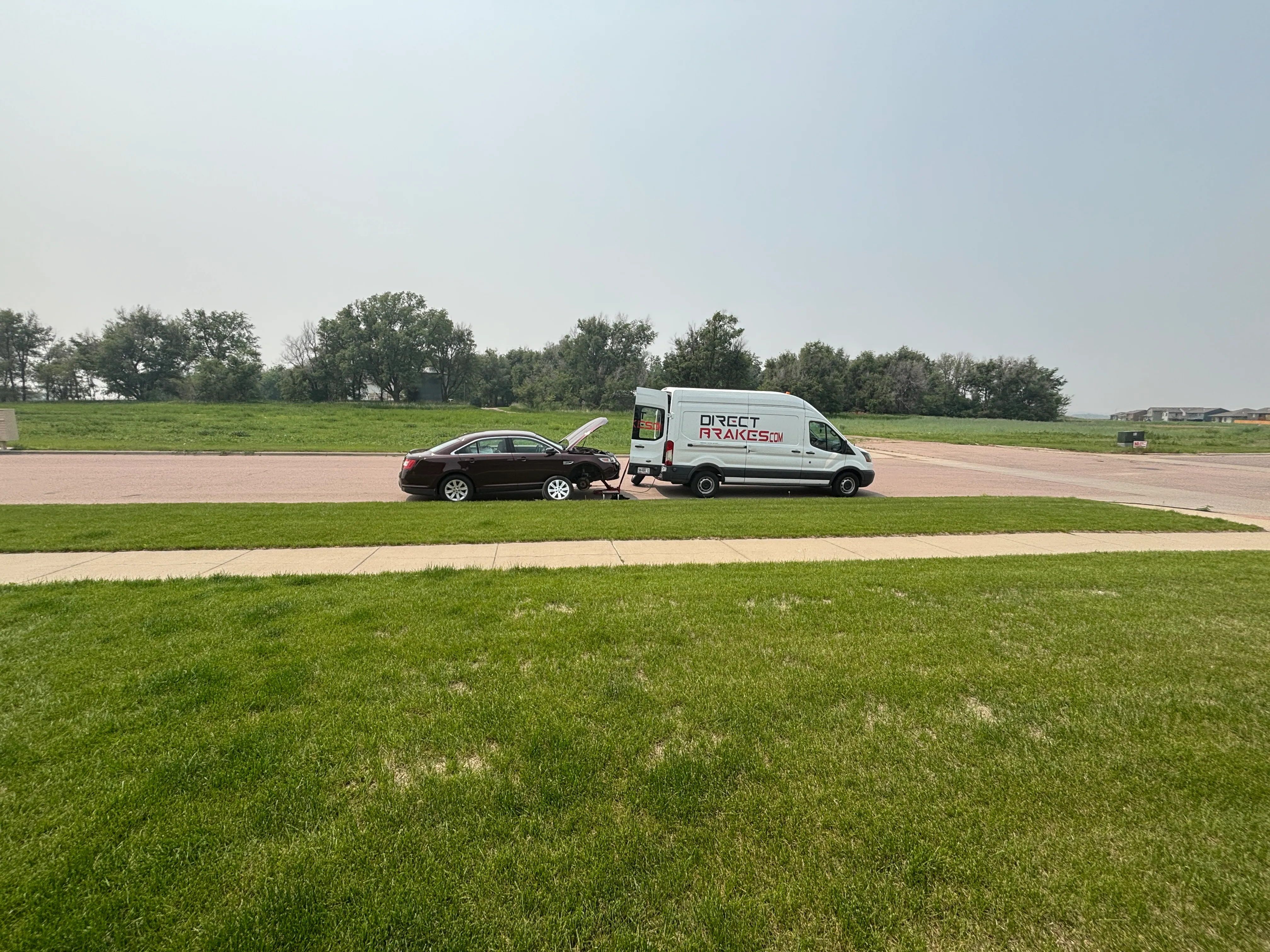
Car pulling when you brake? Call (605) 376-2130 — we'll diagnose it and fix it at your door, same day.
Car pulling when you brake?
We diagnose and fix it at your door. Same-day appointments available.
Get Free Quote (605) 376-2130