
Key Takeaways
- Stop driving today: grinding noise, soft or spongy pedal, burning smell from one specific wheel
- Service this week: squealing wear indicator, brake warning light, car pulling when braking, vibration when braking
- Squealing = early warning, days to act. Grinding = past the warning, rotors being damaged right now
- A soft pedal means your braking system has lost hydraulic integrity — this is a brake failure risk, not a comfort issue
- None of these signs resolve on their own. Every one of them gets worse with time
Squealing or Squeaking When You Brake
A high-pitched squeal when you press the brake pedal is almost always the wear indicator — a small hardened steel tab built into the brake pad specifically to make this noise when the friction material gets low. It's engineered to be annoying. It's telling you: pads are low, replace them before they reach metal-on-metal contact.
The wear indicator squeals when you apply the brakes. When it starts squealing when you're NOT braking — driving at speed with no pedal — you're closer to the end. At that point the indicator is in near-continuous contact with the rotor.
Other squealing causes that don't need immediate action: light surface rust after the car sat overnight (clears in the first few stops), high-metallic semi-metallic pads (occasional squeal is a known characteristic, braking performance is fine), morning cold squeaks from temperature changes. These clear on their own. The wear indicator squeal does not.
What happens if you ignore it
The squeal turns to grinding. Grinding means the metal backing plate is contacting the rotor — rotor damage begins immediately. A pad replacement job that runs $150–$200 per axle becomes a pad-plus-rotor job at $300–$500. The squeal is the cheap version of this repair.
Schedule within the week — before it reaches grindingGrinding Noise When Braking
Grinding is what comes after squeal — you've gone past the wear indicator and into metal-on-metal contact. The steel backing plate of the brake pad is now pressing directly against the rotor face. Every stop scores the rotor surface. Every mile increases the damage. What was a pad replacement is now a pad-and-rotor replacement, and if it's been grinding long enough, the caliper may need to go too.
Grinding also compromises your stopping distance — the friction coefficient of metal on metal is dramatically lower than pad compound on rotor. Your brakes technically still work, but they're working significantly harder for less result.
Grinding from debris (a small stone lodged between pad and rotor) is possible and often clears within a mile. But if the grinding is consistent, present every time you brake, and doesn't clear — it's worn pads, not debris.
What happens if you ignore it
The rotor develops deep grooves. Grooved rotors can't be resurfaced and must be replaced. The caliper piston, now under constant heat stress, can begin to seize. Brake fluid at that corner overheats. A repair that's currently $300–$400 heads toward $600+. Get it same-day if at all possible.
Same-day — rotor damage is happening every stopSoft, Spongy, or Sinking Brake Pedal
A normal brake pedal is firm — it resists quickly and engages the brakes with a predictable amount of travel. A pedal that feels soft, spongy, or that travels further than usual before the brakes engage means your hydraulic system has lost integrity. The most common causes: air in the brake lines (air is compressible, fluid isn't — air bubbles absorb pedal force instead of transmitting it), a brake fluid leak, or brake fluid that's been heated past its boiling point by a dragging caliper.
A pedal that sinks slowly to the floor while you hold it at a stop is a strong indicator of a failing master cylinder or an internal leak. A pedal that goes to the floor on the first press but firms up on the second is usually air in the lines. Both are urgent.
What happens if you ignore it
A spongy pedal can become a pedal that goes to the floor with no warning. Hydraulic brake failure is not a gradual loss of effectiveness — it's a sudden loss. Read our full guide on brake pedal going to the floor if you're already at that stage.
Don't drive it — hydraulic failure riskBurning Smell from One Wheel
A burning smell after a long downhill or repeated hard stops is normal — brakes run hot under heavy use and the smell clears once they cool. A burning smell during ordinary driving with no recent heavy use is not normal, especially when it comes from one specific corner of the car.
That one-wheel burning smell almost always means a seized brake caliper keeping the pad in constant drag contact with the rotor. The affected wheel runs much hotter than the others. The constant heat eventually raises the temperature of the brake fluid at that corner to its boiling point — and boiled brake fluid turns to vapor, which is compressible, which gives you a soft pedal. Left long enough, this becomes a brake failure scenario with no further warning.
General overheating after hard use: pull over, cool 10–15 minutes, continue. Burning smell during normal driving from one wheel: stop. See the full burning smell guide for the complete diagnostic breakdown.
Stop driving if from one wheel — same-day serviceBrake Warning Light On
Modern vehicles have two brake-related warning lights. The red brake light (circle with exclamation mark or "BRAKE") can mean the parking brake is still engaged, brake fluid is critically low, or there's a hydraulic fault. The yellow ABS light means the anti-lock brake system has a fault — your regular brakes still work but ABS won't activate in an emergency stop.
First check: is the parking brake fully released? If yes and the red light is still on, check the brake fluid reservoir under the hood — it's a clear plastic reservoir, fluid should be between MIN and MAX. Low fluid can mean a slow leak in the system that's been losing fluid over time. Don't just top it off and ignore the light — find out where the fluid went.
If the light came on and the pedal also feels different — softer, longer travel, or any sponginess — treat it as Stop Driving, not Service This Week.
Service within a few days — same-day if pedal feels offCar Pulling to One Side When Braking
If the car tracks straight when you're cruising but pulls left or right when you press the brake pedal, the braking force is uneven — one side is stopping harder than the other. The car naturally pivots toward the side with more braking force. The most common cause is a seized caliper (either not releasing and dragging, or not applying fully). A collapsed brake hose, contaminated brake pads, or dramatically uneven pad wear can produce the same pull.
A mild pull under normal braking becomes a hard veer under emergency braking. The same imbalance that drifts you a foot at 30 mph can push you into the next lane at 60 mph. Avoid highway speeds and close following until it's diagnosed.
Full breakdown at our brake pull diagnosis guide.
Service this week — avoid highway driving until fixedVibration or Shaking When Braking
Vibration through the steering wheel when braking almost always means warped or unevenly worn front rotors — the pads clamp against an uneven surface and bounce at the rotor's rotation speed, sending that oscillation through the steering column. Pedal pulsation without steering wheel involvement usually points to rear rotors. Shaking plus a pull to one side suggests a seized caliper doing double damage.
The longer warped rotors run, the more likely they transfer their uneven wear pattern into the pads — and now both need replacing even though only the rotor was originally at fault. A rotor resurfacing job at $30–$45 per rotor becomes a pad-and-rotor replacement at $200–$300 per axle.
See the full shaking when braking guide for every cause and how to tell them apart.
Service this week — before warp transfers into padsAll 7 Signs at a Glance
These signs don't go away on their own
Every brake warning sign on this page gets worse with time — never better. The squeal becomes grinding. The soft pedal gets softer. The pull gets sharper under hard braking. The difference between catching it at the squeal stage and letting it reach grinding can be $200–$400 in additional repair cost, and the difference between a spongy pedal and a pedal that fails is a matter of miles.
Frequently Asked Questions
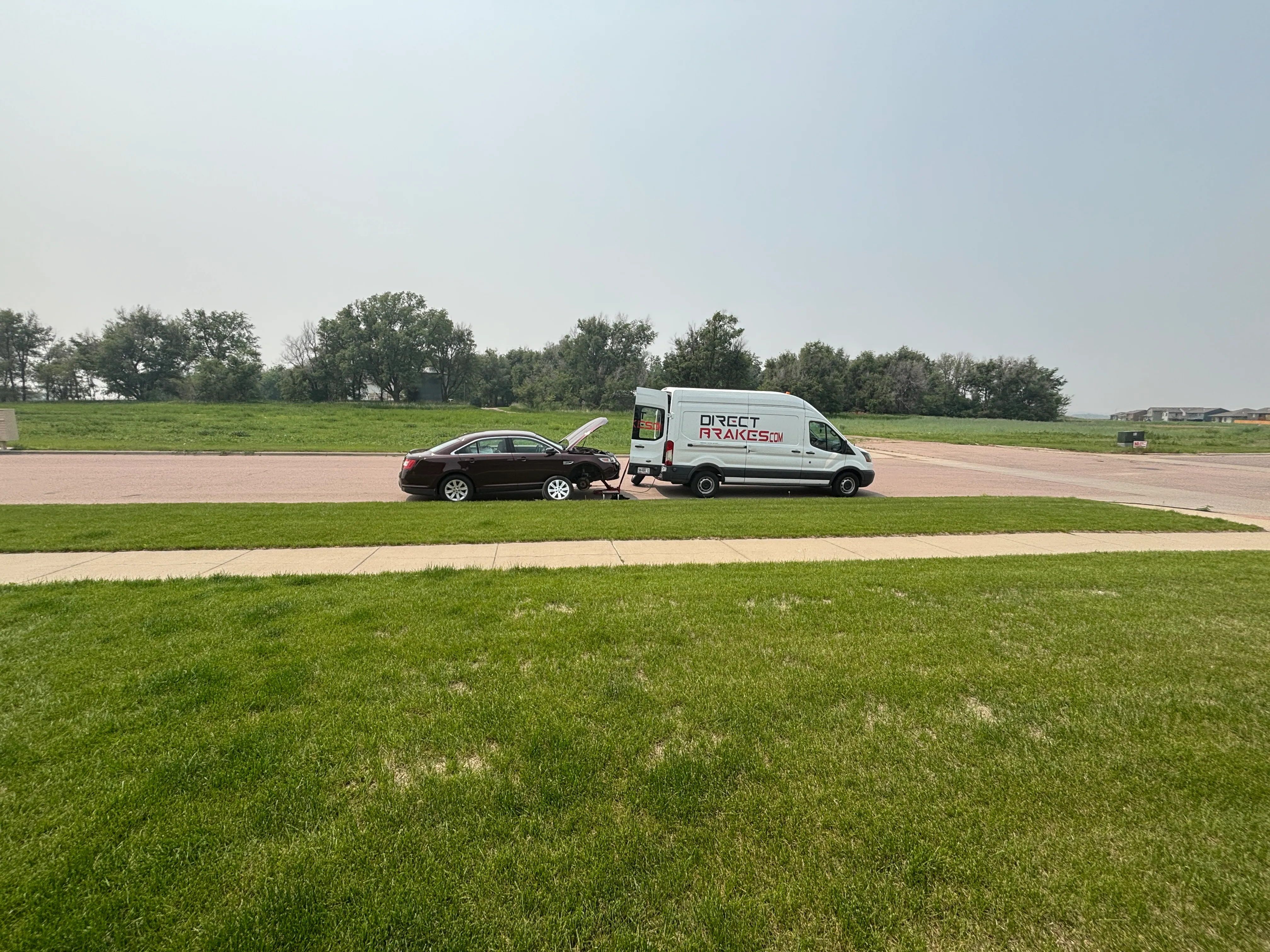
Car pulling when you brake? Call (605) 376-2130 — we'll diagnose it and fix it at your door, same day.
Hearing any of these warning signs?
We diagnose and fix it at your door. Same-day appointments in Sioux Falls and Omaha.
Get Free Quote (605) 376-2130