
Key Takeaways
- 90% of hard pedal complaints are brake booster or vacuum related
- A hard pedal is the opposite problem from a soft one — it means the power assist is gone, not the fluid
- You can confirm a booster failure in your driveway in under 60 seconds — no tools needed
- A cracked vacuum hose is a $20 fix; a bad booster is $200–$450
- The car will still stop — but braking effort and reaction time both increase significantly
The 60-Second Booster Test
Before diving into causes, do this test first. It takes one minute and tells you immediately whether the booster is the problem.
The 4 Causes — In Order of How Common They Are
Failed Brake Booster
The brake booster sits between the pedal and the master cylinder. It uses engine vacuum to multiply the force of your foot — typically by a factor of 3–4x. Without it, stopping a two-ton vehicle with your leg alone is exhausting and slow. When the internal rubber diaphragm tears or the booster body cracks, it can no longer hold or use vacuum.
The pedal doesn't go to the floor — it just requires a much harder push than normal. The brakes still work mechanically, which is why people sometimes dismiss it. They shouldn't.
- Booster test above: pedal stays hard after starting the engine
- Pedal was normal, then suddenly got very stiff
- No hissing sound, no vacuum hose damage visible
- Vacuum hose and check valve are confirmed good
Cracked or Disconnected Vacuum Hose
The booster gets its vacuum through a rubber hose connected to the engine's intake manifold. Over time, that hose dries out, cracks at the connection points, or simply works itself loose. The booster can be perfectly fine internally — but if it's not receiving vacuum, it behaves exactly like a failed booster.
This is worth checking first because a new vacuum hose costs $15–$30 versus several hundred for a booster. Visually trace the hose from the back of the intake manifold to the booster. Look for cracks, splits, or loose fittings.
- Hissing sound from behind the dashboard or engine bay when braking
- Booster test fails — but hose shows visible cracking or feels soft/collapsed
- Hose is disconnected or loose at either end
Bad Booster Check Valve
The check valve is a small one-way valve where the vacuum hose connects to the booster. Its job is to trap stored vacuum inside the booster so there's always reserve when you brake. When the check valve fails, vacuum bleeds back out — the booster empties between presses and every stop requires the engine to rebuild it from scratch.
Symptoms are intermittent: the first press feels normal, but rapid repeat stops get progressively stiffer. The valve itself is usually a $10–$20 part and takes 10 minutes to replace.
- First stop feels normal — subsequent quick stops get harder each time
- Pedal feels fine during normal driving but stiff during quick braking
- Vacuum hose is intact and booster has no internal failure
Seized Brake Caliper
Less common than booster problems, but a seized caliper creates physical resistance the pedal has to push against. If a caliper piston or guide pin corrodes and freezes in place, the pad can't move freely — the pedal meets that resistance directly. It won't feel like standing on concrete (booster failure), but more like the brake requires unusual effort on one side.
You'll usually notice other symptoms alongside the stiff pedal: the car pulling to one side when braking, or a wheel that runs noticeably hotter than the others after a drive.
- Car pulls to one side under braking
- One wheel is hot to the touch after a drive (other wheels are cool)
- Burning smell from one corner of the car
- Booster test passes — booster is not the issue
Hybrid and diesel owners — different setup
Many hybrids and some diesels use an electric vacuum pump instead of engine intake vacuum. If the pump fails or the belt driving it breaks, the result is the same: a rock-hard pedal. The booster test still works — but the fix is the pump, not the booster itself.
Frequently Asked Questions
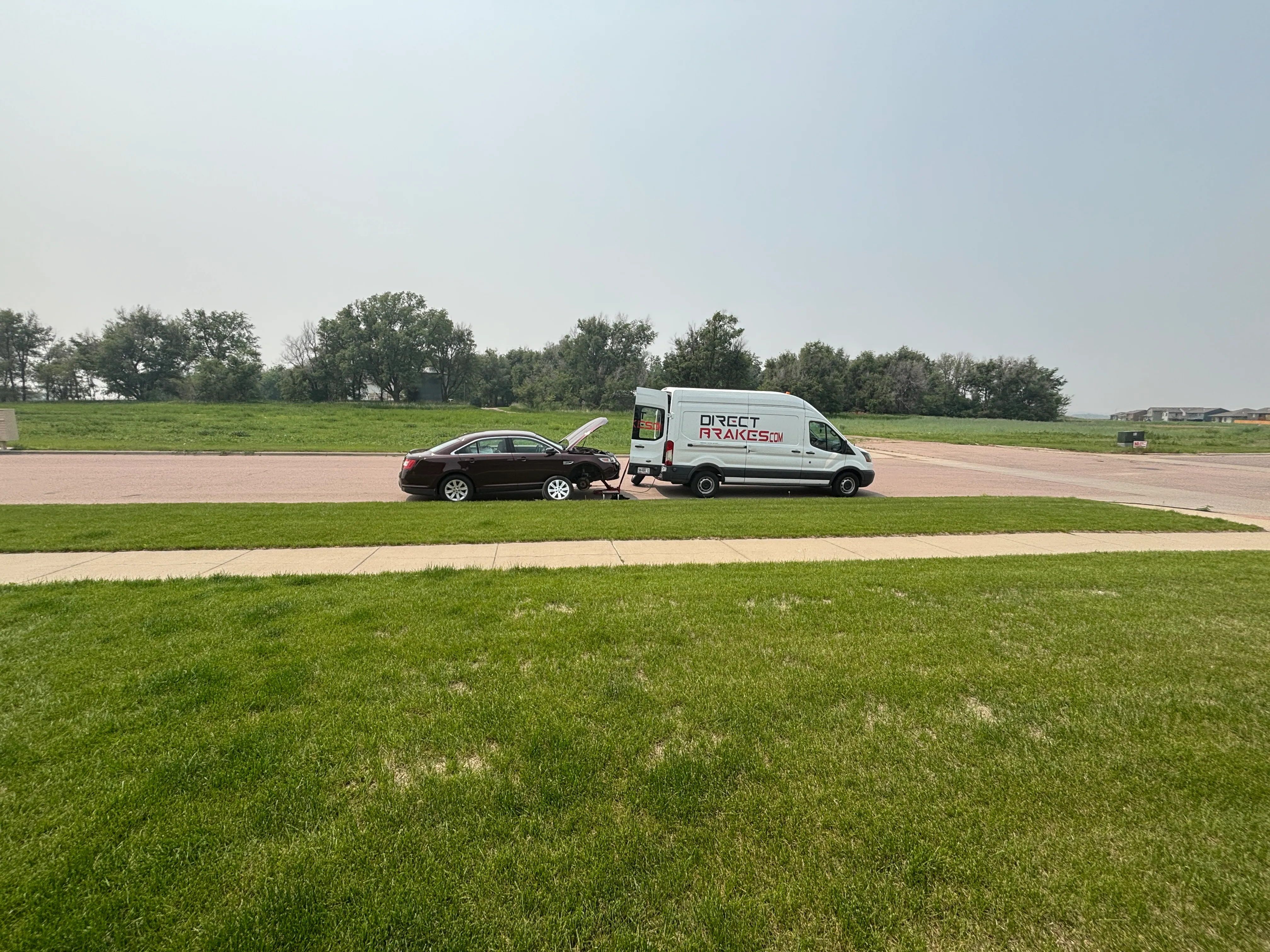
Pedal feel off? We diagnose and fix brake booster and caliper issues same day. (605) 376-2130
Hard pedal? We come to you.
Same-day brake diagnosis and service at your home or office.
Get Free Quote (605) 376-2130