Brake Noise Guide · Sioux Falls, SD

Why Are My Brakes Squeaking?

That squealing, grinding, or scraping noise isn't just annoying — it's your brakes trying to tell you something. Here's how to figure out what each noise means, whether it's safe to keep driving, and how to fix it.

Free Brake Inspection
★ 5-Star Google Reviews
Mobile — We Come to You
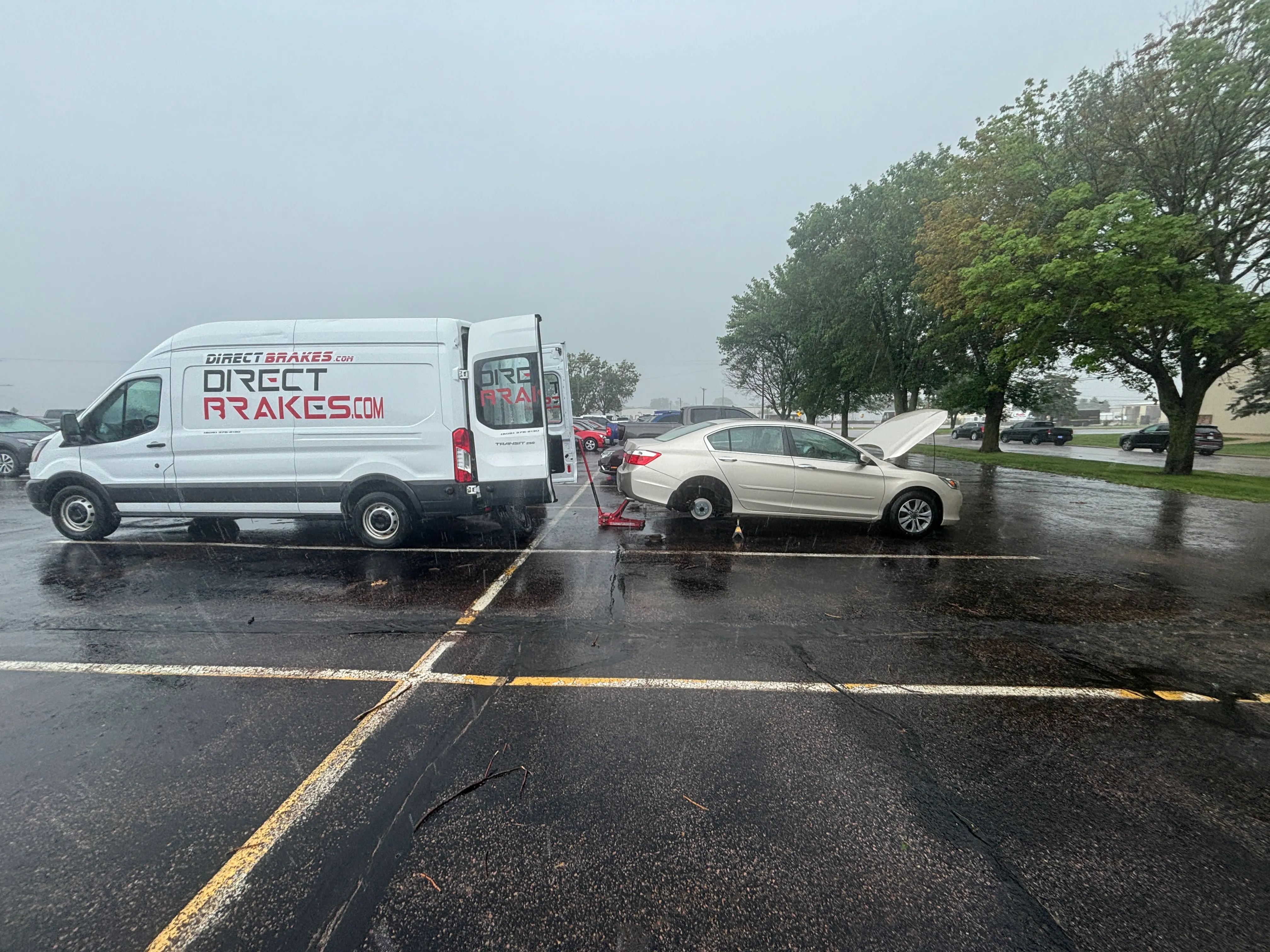
Brake technician inspecting squeaky brake pads and rotors

Identify Your Brake Noise

Not all brake noises are the same. Find yours below to understand what's going on.

🔊 Usually Harmless

Light Squeal in the Morning

"A high-pitched squeak that goes away after a few stops"

Overnight moisture or light rust forms on the rotor surface — especially common in South Dakota's climate. Your first few brake applications wipe it clean and the noise disappears.

Cause: Surface moisture / overnight condensation
Fix: Nothing needed — this is normal. If it persists past your first few stops, get an inspection.
⚠️ Schedule Soon

Constant High-Pitched Squeal

"A steady, high-pitched screech every time I brake"

This is usually the wear indicator — a small metal tab built into your brake pad that contacts the rotor when pads are low. It's designed to make this noise as a warning before pads wear completely out.

Cause: Worn brake pads reaching their wear indicator
Fix: Brake pad replacement — typically under an hour per axle.
🛑 Fix Immediately

Grinding or Metal Scraping

"A harsh, metallic grinding every time I press the pedal"

The brake pad friction material is completely gone. The metal backing plate is grinding directly against the rotor — damaging it with every stop. This reduces stopping power and can overheat your calipers.

Cause: Pads worn to bare metal — metal-on-metal contact
Fix: New pads + new rotors — don't drive on this. Call us today.
⚠️ Get Inspected

Vibration or Pulsing When Braking

"The steering wheel shakes or brake pedal pulses when I slow down"

This isn't really a sound but a feeling — and it points to warped rotors. The uneven rotor surface creates a pulsing sensation that gets worse at highway speeds.

Cause: Warped or unevenly worn brake rotors
Fix: Rotor replacement — we always install new rotors, never resurface.
🔊 Likely Normal

Squeak After New Brake Pads

"I just got new brakes and they're squeaking"

New pads go through a break-in period as the pad material transfers onto the rotor. Light squeaking during the first 100–200 miles of driving is normal and should resolve on its own.

Cause: New pad break-in / bedding process
Fix: Drive normally for a few days. If squeaking continues past 200 miles, contact us — it may need re-bedding or hardware adjustment.
⚠️ Schedule Soon

Rattling or Clunking Over Bumps

"A loose rattle or clunk when I hit bumps, especially when braking"

This can indicate loose brake hardware, worn caliper pins, or a caliper that's not seated properly. It's not as urgent as grinding, but it shouldn't be ignored.

Cause: Worn hardware, loose caliper, or missing anti-rattle clips
Fix: Brake inspection to identify the loose component — often fixable during a standard pad replacement.

How Urgent Is Your Brake Noise?

A quick reference to help you decide: keep driving, schedule soon, or stop now.

KEEP DRIVING
SCHEDULE THIS WEEK
FIX TODAY

Safe to Monitor

Morning-only squeal that stops after a few brakes. New pad break-in noise under 200 miles. Very light squeak in wet weather only.

Schedule Within a Week

Consistent squeal every time you brake. Steering wheel vibration or pedal pulsing. Rattling or clunking from the wheel area. Noise that's getting gradually louder.

Stop Driving — Fix Today

Metal-on-metal grinding. Brakes feel spongy or unresponsive. Car pulls to one side when braking. Burning smell from the wheels. Call (605) 376-2130

6 Common Causes of Squeaky Brakes

Understanding the root cause helps you decide whether it's a simple fix or a bigger repair.

1

Worn Brake Pads

The #1 cause. Built-in wear indicators create a squeal when pads get thin — it's a deliberate warning signal telling you it's time for new pads.

2

Surface Moisture & Rust

Overnight condensation creates a thin rust layer on bare metal rotors. First few brakes each morning wipe it off. Completely normal in Sioux Falls weather.

3

Glazed or Overheated Pads

Aggressive braking or riding the brakes downhill can overheat pads, creating a hard, glassy surface that squeals instead of gripping smoothly.

4

Warped Rotors

Heat cycling and heavy use warp the rotor surface, causing vibration and noise when pads make uneven contact.

5

Dust or Debris

Small rocks, road grit, or brake dust trapped between the pad and rotor cause intermittent scraping. Usually clears itself after a few stops.

6

Cheap or Wrong Pad Compound

Low-quality pads or the wrong compound for your vehicle create noise from day one. We use OEM-grade pads matched to your exact make and model to avoid this.

How We Fix Squeaky Brakes

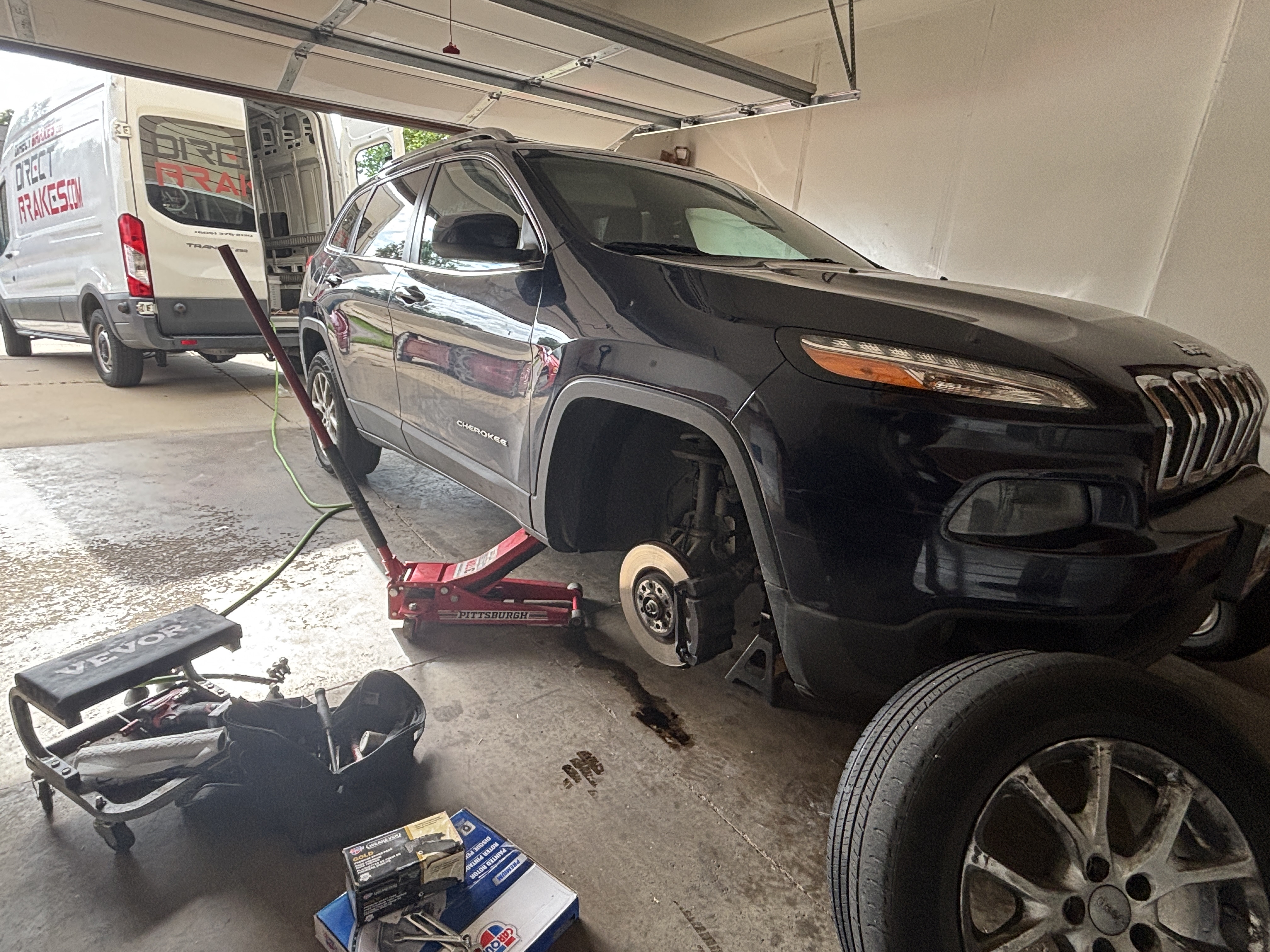
Every repair starts with a free inspection at your location — so you know exactly what's going on before spending anything.

Not sure what you need?

That's what the free inspection is for. We come to your location, pull the wheels, measure everything, and show you exactly what's causing the noise. No charge, no obligation. Schedule your free inspection →

Fresh brake pads and rotors installed — no more squeaking

How to Prevent Brake Noise

Most brake squealing is preventable with proper maintenance and quality parts. Here's what we recommend:

Replace pads before they're metal-on-metal. The wear indicator squeal is your early warning. Catch it at that stage and you typically only need pads — wait too long and you'll need rotors too.

Use the right pad compound. We match ceramic or semi-metallic pads to your vehicle's specs. Cheap universal pads are the biggest source of noise after installation.

Flush your brake fluid. Old, moisture-laden fluid corrodes caliper pistons, causing uneven pad wear and noise. A brake fluid flush every 2–3 years prevents this.

Don't skip the hardware. Anti-rattle clips, shims, and slide pins are small parts that prevent big noise. We replace hardware with every brake job.

Squeaky Brakes — FAQ

Quick answers to the most common brake noise questions.

Most commonly, worn brake pads hitting their built-in wear indicator. Other causes include moisture on the rotors, dust or debris, glazed pads, or low-quality pad material. A free inspection pinpoints the exact cause.
Light morning squeal that goes away quickly is usually harmless. Constant squealing means worn pads — schedule service soon. Grinding or metal scraping is unsafe and needs immediate repair. When in doubt, call us for a free inspection.
Grinding means the pad material is completely worn away and the metal backing is pressing against the rotor. This damages rotors, can overheat calipers, and significantly increases stopping distance. Stop driving and call (605) 376-2130.
Sometimes. Morning moisture squeal and new-pad break-in noise often resolve on their own. But persistent or worsening squeal is actual wear that won't fix itself — it'll only get louder and eventually turn into grinding.
New pads transfer material onto the rotor surface during a break-in period. Light squeaking for the first 100–200 miles is normal. If it continues beyond that, it may be a hardware issue, wrong pad compound, or improper bedding. Contact us if noise persists.
Depends on the cause. Moisture noise costs nothing. Pad replacement fixes most squeal. If rotors are damaged from grinding, you'll need pads and rotors. Our free inspection tells you exactly what's needed. See full cost breakdown.
Overnight humidity creates a thin layer of surface rust on the rotors. Your first few brake applications scrub it off. This is completely normal in Sioux Falls and not a safety concern. If the squeak lasts beyond your first few stops, something else is going on.

Related Guides

Hear Something? Get a Free Inspection.

We come to your location, diagnose the noise, and show you what's going on — no charge, no obligation.

(605) 376-2130 Schedule Free Inspection