Quick Answer
Brake squeal when stopping usually means your brake pad wear indicators are scraping the rotor. This is a built-in warning that your pads are nearly worn out and need replacement within the next 500 to 1,000 miles.
Brake squeal when stopping usually means your brake pad wear indicators are scraping the rotor. This is a built-in warning that your pads are nearly worn out and need replacement within the next 500 to 1,000 miles.
That high-pitched squeal you hear when braking is your car trying to tell you something. In most cases, it means your brake pads have worn down to the metal wear indicator. This small metal tab is designed to contact the rotor and make noise when your pads get thin. It is an early warning system built into the brakes.
The good news: squealing brakes usually give you time to schedule a repair before anything serious happens. The bad news: ignoring that squeal can lead to grinding, rotor damage, and repair bills that double or triple in cost.
There are five common reasons your brakes might be making noise. Understanding the cause helps you know whether it is urgent or just annoying.
Brake pads have a metal wear indicator built in. When the pad material wears down to about 2-3mm, this metal tab starts scraping the rotor surface. The result is that high-pitched squeal you hear every time you slow down. This is the most common cause and means you need brake pad replacement soon.
A thin layer of rust can form on your rotors overnight, especially in humid conditions. When you first apply the brakes in the morning, this rust gets scraped off and can cause a brief squeal. This is normal and should stop after a few brake applications.
If brakes overheat from heavy use (like driving down a mountain), the pad surface can become hard and smooth. This glazed surface does not grip the rotor properly and can cause squealing. Glazed pads need to be replaced.
Low-quality brake pads often contain metal chunks that can scrape against the rotor. Some aftermarket pads simply do not fit your vehicle properly. Using OEM-spec or quality ceramic pads eliminates this problem.
Small stones, dirt, or debris can get caught between the brake pad and rotor. This usually causes intermittent squealing that comes and goes. The debris often works itself out, but persistent noise needs inspection.
Get an instant quote for brake pad replacement. We come to you in Sioux Falls and Omaha.
Get Free EstimateSquealing is usually an early warning, not an emergency. But certain signs mean you should stop driving and get your brakes checked immediately:
Not all squealing means something is wrong. These situations are usually harmless:
The fix depends on the cause. Here is what typically needs to happen:
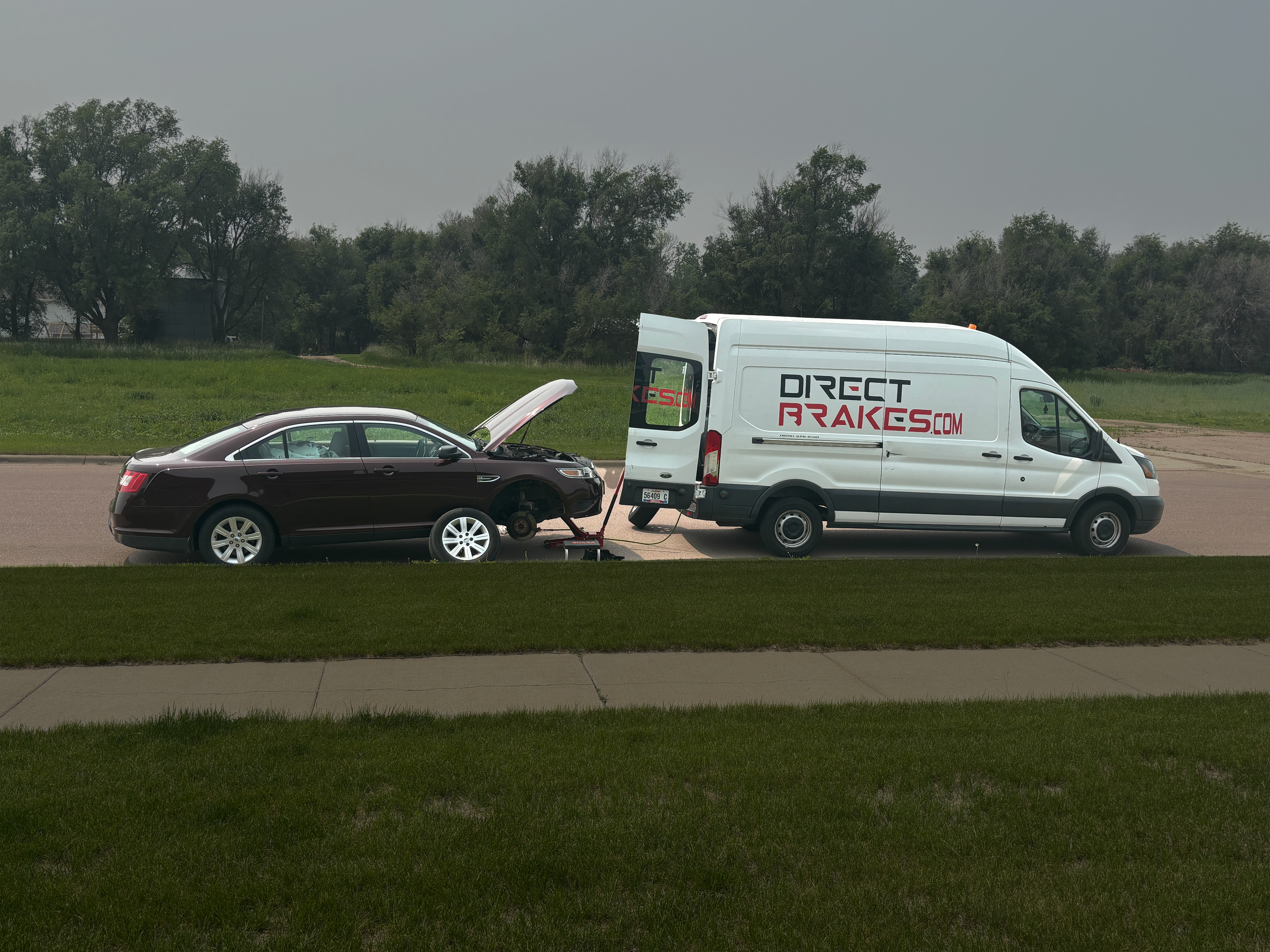
For mobile brake service in Sioux Falls or Omaha, Direct Brakes can inspect your brakes and replace pads at your location. Our brake pad replacement service includes quality ceramic pads and a 12-month warranty.
Squealing brakes are usually safe to drive for a short time, typically 500 to 1,000 miles. However, you should get them inspected soon. If the squeal turns to grinding, stop driving immediately as this indicates metal-on-metal contact that can damage rotors and compromise safety.
Fixing squealing brakes typically costs $180 to $250 per axle for brake pad replacement. If the rotors also need replacement, expect $325 to $475 per axle. Direct Brakes includes parts, labor, and a 12-month warranty in all pricing. Get an instant quote for your specific vehicle.
Morning brake squeal is usually caused by moisture or light rust buildup on the rotors overnight. This is normal and the noise should disappear after a few stops. If it persists throughout the day, you likely have worn brake pads that need replacement.
Skip the shop. We come to you, replace your brakes on the spot, and save you 20 to 30 percent. No trip fees, no hidden charges, just honest pricing with a 12-month warranty.
Get Your Free EstimateOr call (605) 376-2130 for same-day service