Bad Battery or Bad Alternator? How to Tell the Difference
If the car starts after a jump and starts again on its own later, it was the battery. If it dies while driving or soon after the jump, suspect the alternator.
If the car starts after a jump and keeps running, then starts again on its own later, the battery was the problem. If it dies again while driving or shortly after the jump, suspect the alternator. A battery warning light while driving also points to the alternator. A voltmeter settles it: about 12.6 volts with the engine off means a charged battery, and roughly 14 volts with the engine running means the alternator is charging.
The Simple Jump Test
The battery starts the car. The alternator keeps everything running once the engine is on and recharges the battery as you drive. That is why the easiest way to tell them apart is to jump the car and watch what it does next.
Jump the car and let it run a few minutes. Then remove the cables.
If it dies within a few minutes, the alternator is likely not charging. The car was running on what the jump put in.
If it keeps running, drive it at least 30 minutes, then shut it off and let it sit.
If it starts on its own later, the battery was weak or drained. If it needs another jump, the battery is not holding a charge and needs a test.
Do not pull a battery cable off with the engine running to test the alternator. That old trick can spike the voltage and damage the electronics on modern cars.
Symptoms Side by Side
What you notice
Most likely
Clicks or cranks slowly, starts fine after a jump
Battery
Starts after a jump, restarts on its own later
Battery
Dies while driving
Alternator
Dies again shortly after the jump
Alternator
Battery warning light on while driving
Alternator or charging system
Lights dim or flicker while driving
Alternator
Whining or grinding noise from the engine bay
Alternator
Battery over 4 to 5 years old, slow starts in the cold
Battery
Swollen or leaking battery case
Battery, replace it now
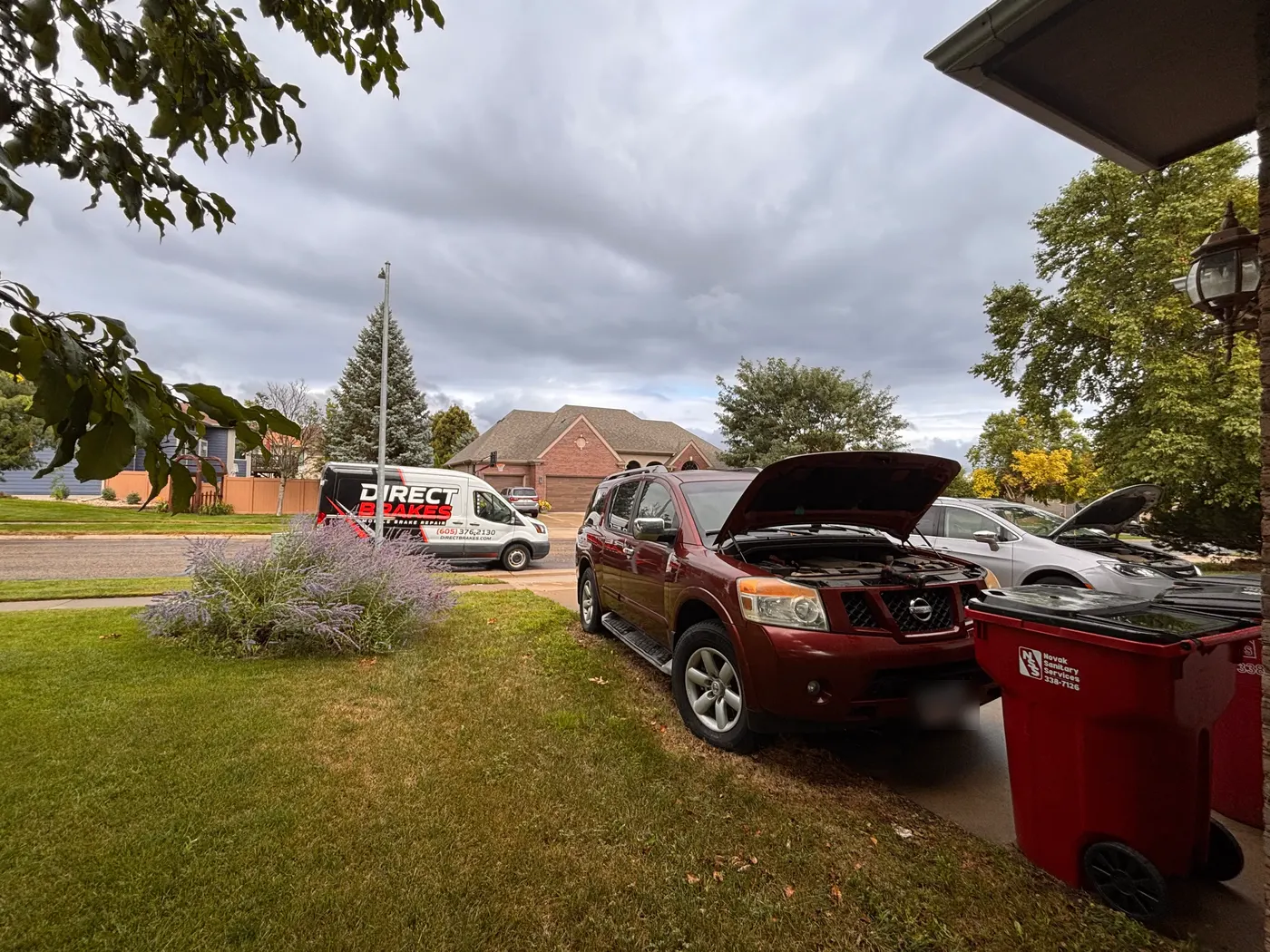
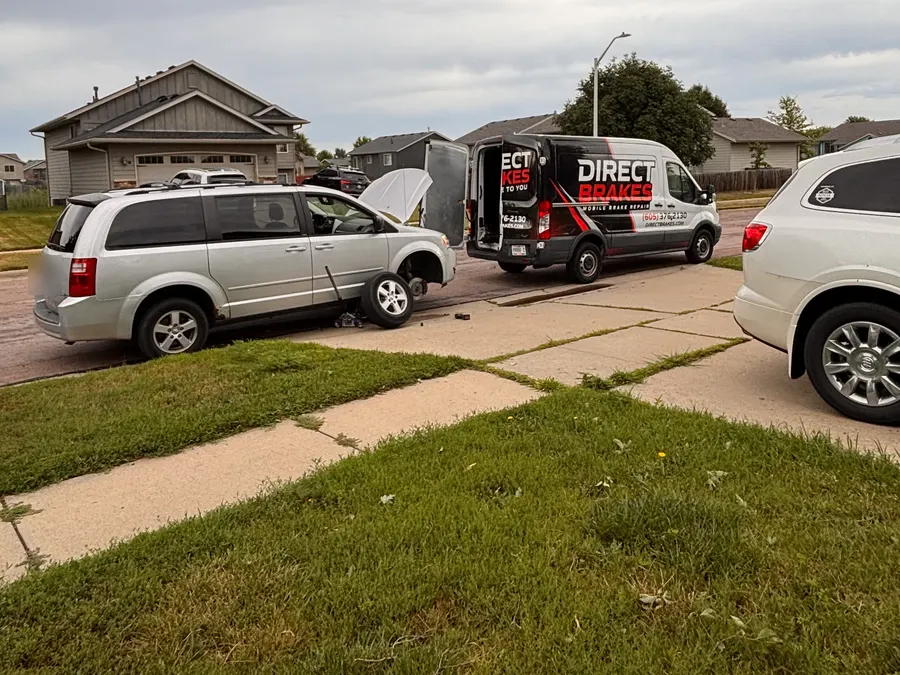
Same van, same tools, in your driveway instead of a shop.
The Voltage Numbers
A cheap voltmeter across the battery posts answers the question in two readings.
Engine off, about 12.6 volts: the battery is fully charged.
Engine off, around 12.4 volts: partly charged.
Engine off, under about 12.2 volts: low. Charge it and test again.
Engine running, roughly 14 to 14.7 volts: the alternator is charging.
Engine running, about the same as engine off: the alternator is not charging.
Voltage at rest does not tell the whole story. A battery can read 12.6 volts and still collapse when the starter pulls on it, so a load test is the real check. Some newer cars with smart charging run lower voltage on purpose at times, so one low reading on those is not proof of a bad alternator.
Not Sure Which One It Is? We Test Both.
Battery and charging system tested at your home or work in Sioux Falls, Brandon, Tea and Harrisburg.
A bad alternator will drain a brand new battery. If you put a new battery in a car that is not charging, you will be back to a dead car in a day or two and out the cost of the battery. Test the charging system first.
It works the other way too. A weak battery makes the alternator work harder trying to keep it charged, and a long drive to recharge a deeply drained battery strains it. Replacing a worn battery early can save the alternator.
Cold Weather Makes Both Show Up
Cold cuts a battery's starting power, and a battery that was borderline in October often fails on the first below-zero morning in Sioux Falls. Short winter trips with the heater, defroster and seat heaters running also never give the battery time to recharge. If your battery is over four years old, test it before winter, not after it strands you.
What Each Repair Costs
A battery is usually the cheaper fix. Our all-in mobile battery price runs $319 to $389 plus tax depending on your battery size, including installation, a charging system test and recycling the old battery. Get your exact price in about a minute.
An alternator usually costs more than a battery. We do not replace alternators. If our test shows the alternator is the problem, we tell you on the spot so you do not pay for a battery you do not need.
Frequently Asked Questions
Jump the car and watch what happens. If it keeps running and restarts on its own later, the battery was the problem. If it dies again while driving or soon after the jump, or the battery light comes on while driving, suspect the alternator.
Yes. If the alternator is not charging, the car runs off the battery until it is drained. Put a new battery in a car with a bad alternator and the new battery will go dead too, so test the charging system before buying a battery.
About 12.6 volts with the engine off means a fully charged battery. Around 12.4 volts is partly charged, and under about 12.2 volts is low. With the engine running, most cars read roughly 14 to 14.7 volts when the alternator is charging.
Longer than you think. A short drive does not fully recharge a deeply drained battery, and asking the alternator to do it strains the alternator. Drive at least 30 minutes, then get the battery tested or put it on a charger.
No. We replace batteries. We test the charging system on every battery call, and if the alternator is the problem we tell you on the spot so you do not pay for a battery you do not need.
We test the battery and the charging system at your location in Sioux Falls, Brandon, Tea and Harrisburg, and only replace the battery if it is actually the problem.